Author Interview: Rocky Wood (Part 1)

Rocky Wood is a legend in the horror fiction world. Horror Writers Association president, Stephen King expert, author, ambassador and all-round nice guy.

For the past eighteen months or so, I’ve been working with Rocky on the graphic novel Witches!, which he is co-writing with Bram Stoker Award winner Lisa Morton and I am illustrating. 

In part one of this two-part interview, Rocky talks to me about his passion for all things Stephen King.

Tell me about your first introduction to horror fiction

Unsurprisingly, this was at the hands of Stephen King. I really didn’t read horror in my youth – in fact I don’t believe I read even Poe until my twenties.
My taste up until then ran more to classic fiction like ‘War and Peace’, ‘Gone With the Wind’; historical fiction, including Michener and obscure but brilliant books like ‘Andersonville’ (McKinley Kantor) and ‘A Distant Trumpet’ (Paul Horgan); and political thrillers such as Allen Drury’s ‘Advise and Consent’ series (you’ll note a bias toward American fiction). My guilty pleasure was Robert Ludlum! And I read huge amounts of non-fiction – history and biography in particular. Then came the day I went to the movies to see the latest hit, ‘Carrie’.
When did your “healthy obsession” with Stephen King begin? What was the first book of King’s that you read and what was that moment you knew you would become a lifelong fan?
That night at the movies, of course! It was early in 1977 – the next day was a Saturday and in those days in New Zealand shops were only open until lunchtime. I headed to the three bookshops in downtown Wellington to buy ‘Carrie’ and none had it, so I walked off with ‘Salem’s Lot’. Within a day, Mr King had captured me for a lifetime!
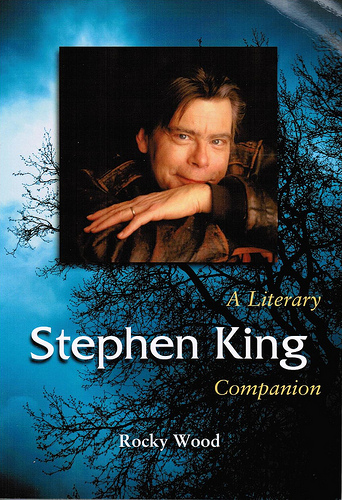
I guess I didn’t know it then – it probably took a book or two more – ‘The Shining’, and then ‘The Stand’ before I knew I needed to read everything King had written and would ever write. As a university student I didn’t have a lot of spare cash, but I bought King, Michener and Ludlum in hardback, as they came out (Clancy supplanted Ludlum when the latter got rather repetitive), which was the indication I was hooked.
I know the big fellow doesn’t like being reminded ‘The Stand’ is a favourite of most fans, bemoaning that ‘Stand-fans’ wouldn’t care if he’d never written another word but that is really not true. ‘The Stand’ welded many of us on and we hung out, we still hang out, for every new book and short story.

What inspired you to want to collate everything King has ever written/created. How did you motivate yourself to even take on such a task?
Well, I’d been a freelance journalist through my university years and did quite well both in terms of getting published and in terms of earnings in those days. I pitched a few books (non-fiction) but didn’t get a bite. Then my corporate career took off and I began concentrating on that and left writing behind. I came back to it twenty years later, at the beginning of this century (wow, think about that, being far enough into a new century that we can talk that way) when I woke up one day and remembered how much I had enjoyed writing.
I am one of those people who can work a 10-12 hour workday and then write for a few hours, at the end of which I feel totally refreshed and relaxed. Writing is cathartic for me. So, when I decided to write again I retained my earlier view that if you write you should get paid for it (not for everyone I know, but as a freelancer you soon learn to focus on consistent, paying markets). I basically developed a business plan for myself that played on my perceived strengths – I knew I could get paid for non-fiction and I knew King’s work intimately; combined with what the market might want – if a book about King couldn’t sell, what would?
Then I made a big mistake (one that paid off). I formed a partnership with David Rawsthorne and Norma Blackburn to compile ‘The Complete Guide to the Works of Stephen King’ – this turned out to be over 6000 pages on compact disk – an ‘electronic book’ (which was unusual in 2003). The mistake was the word ‘Complete’ – I am a perfectionist and having decided to be ‘complete’ meant I would have to somehow access the really obscure King stuff, including his Papers at the University of Maine Fogler Library. And in those Papers are unpublished novels and so on that can only be read with King’s written permission. A daunting task indeed, especially as I live about as far away from Maine as you can get and I had no contact with King.
What to do? I wrote to his office saying I’d like to travel to Maine from Australia and I had allowed three weeks to sit in the Fogler reading the materials there for my project but that I needed SK’s written permission to read the ‘Restricted’ works. To my delight I got a very quick answer from Steve’s wonderful PA (who is now a good personal friend) saying something to the effect that Steve had said if I was silly enough to travel all the way from Australia and sit in a Library for three weeks I was welcome to read the Restricted materials!
The motivation really wasn’t too hard – when I set my mind to something it gets done. And after all I was setting myself a task of reading and summarizing everything written by my favorite author!

How did it feel when you found those obscure pieces King wrote that were thought lost?


Well, it was I who found them, as I travelled to Maine in 2002 and then another five or so times since on my research. It felt fantastic – the whole process was like being an archaeologist – following a range of obscure clues and then determining where to look.
The first lot of a dozen or so stories I found were all in the Fogler – some were in the public boxes and to this day I remain surprised that other researchers hadn’t found them. Each time I found one my spirits lifted, as I had the joy of first reading the story and then revealing the fact that it even existed to the world of King fans.
There is an important point to make here – I believe King to be the equivalent of a Twain or a Dickens. So much of their work may have been lost for all we know and I am determined that should not be the case with King. Future generations of readers, critics and historians should know about as many of the things he’s written as possible, no matter how obscure. Many of them inform his development as a writer, and much of the earlier stuff reflects themes he would later develop in his well-known popular work.
Almost every historian bemoans lost material about their subject (say Lincoln) and I hope I am contributing by documenting works that would otherwise have been lost to the sands of time. I want to make a point here – in the end all this material is actually Stephen King’s – if he wants to bury something or destroy it that is entirely his right. But when he lets it out (say by putting it in his Papers), or when it was published but just ‘lost’ (‘The King Family and the Wicked Witch’ for instance) then I am pretty sure he thinks it fair game. One thing I know about Mr King is that he doesn’t believe in censorship and that would include his own materials gathered from the lost corners of America. 
Perhaps more interesting in terms of finding lost pieces was his non-fiction. Most people don’t know he has published over 800 pieces of non-fiction.
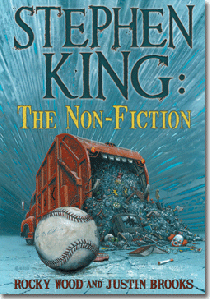
Justin Brooks and I decided to write a book, ‘Stephen King: The Non-Fiction’ that would cover every single piece. There I was again, setting myself a nearly impossible task. Back to Maine and visiting small town libraries, historical societies and so on – looking for material King may have written and published in his high school and university years. And there they were – forty odd new pieces, ranging from a defence of America’s role in Vietnam (!) through to pieces about basketball in his local newspaper.
Again, I am pleased to have found those and brought them to the attention of future researchers. Some of these works might have been lost forever if we hadn’t ‘dug them up’ and put arrangements in place for them to be preserved. Needless to say, I haven’t given up (neither has Justin) and we still regularly turn up ‘lost’ or unknown pieces (largely non-fiction).
Have you ever met Stephen?
I have never met Steve.
This may seem strange but remember I live over ten thousand miles away. During my trips to Maine he has been unavailable and I totally respect that – he recently said even those professionals closest to him often forget that writers need clear time in which to practice their craft. So, I have been very careful to respect his time and his privacy.
He and his office have been incredibly generous to me (in fact, King is incredibly generous full stop – both to the horror and writing communities, and to ‘community’ in general). One of the restricted unpublished novels I read was ‘Sword in the Darkness’ – not a great book, but buried in it was a lengthy chapter (a horror tale) that shone a light on the King that would burst into our lives just a few years after he wrote it. In terms of his development it is an important piece and one of the characters (Edie Rowsmith) deserved a life outside a cardboard box in the Library.
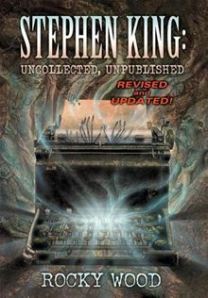
I asked if we could publish that chapter in my first printed book, ‘Stephen King: Uncollected, Unpublished’ and free Edie from her darkness, and King kindly agreed. He later agreed to allow a ‘lost’ poem, ‘Dino’ to be included in the same book. And he allowed me to republished an obscure piece of non-fiction, ‘My Little Serrated Security Blanket’ in ‘Stephen King: The Non-Fiction’. I send him every ‘lost’ piece I find, so that he has a copy.
In part 2 of the interview Rocky will reveal how he became involved with the Horror Writers Association, why he loves horror, his diagnosis of Motor Neurone Disease and what readers can expect from him in the near future.
For more information on Rocky’s Stephen King visit his Amazon page

Living Literature: Horror

So there I was trying to sound like I knew what I was talking about.


Trying to convince people that horror fiction was about more than just blood and gore; that in some instances it had more to say than “don’t go down into that basement”.


Where was I? My local library had invited me to host a seminar on the horror genre as part of its Living Literature program.


The library had promoted it fairly well, arranging interviews with the local newspaper and radio station and it was a great night end. I never expected to get huge crowds, but I was very happy with the half a dozen people who showed. It made it easier to talk.

I prattled on for an hour; about how horror made the reader feel, made them think about things like faith and philosophy – as well as fear. I talked about the themes of my novella “Torment” and utlimately finished with a short reading from my upcoming novella “The Noctuary”.  I also introduced the audience to the website for The Noctuary which can be found HERE

I had intended on posting a video of the reading here, but unfortunately the background noise from the air-conditioning made that impossible. Instead I’ve posted a few photos from the night.


So did I get what I wanted from doing the talk – sure. I got a chance to try and put horror fiction in a serious light and to top it all off I managed to off load half a dozen signed copies of Torment as well.


Here’s to the next talk.

Guest blog: Author Sean A. Lusher

Two failures and (hopefully) a win

After Damnation Books picked up Stricken, I felt halfway decent about my own writing for once. It was June, everything was signed and things were looking up. This is probably what attributed mainly to the writing spree I went on.

For most of June and July, I sat down and wrote. A lot. More so than I ever had before in my life, as far as I can remember. And, at the time, I felt good about it. Amongst all the things I spit out were two novellas, a tragedy and a romance/paranormal/horror. I thought they were publishable.

And then my wife got hold of them.

My wife is a grammar Nazi to a T and worked in a library for five years straight. (Can you see why I married her?) She knows books, she’s intimately familiar with how a story should flow and how to judge a book by its cover. She offers an excellent balance of both literary criticism and the mechanics of grammar. On top of all that, she is entirely unafraid to tell me what she really thinks with a complete and total disregard for my feelings.

Obviously, this is a good thing, since we can learn more from criticism than we can from praise. She told me both of them were pretty far from being ready for people to shell out money for, even just a few bucks. Naturally, I didn’t take well to this, but eventually I realized she was right.


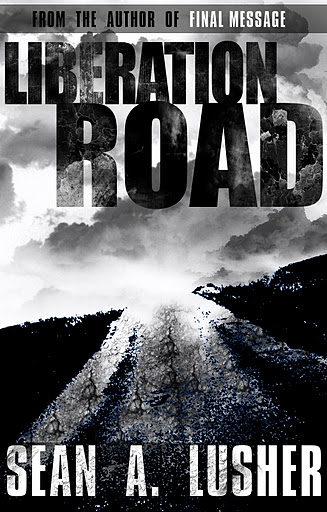
It took me about a month and a half to get back up and try writing something else. This time around, I took more time and focused harder on the writing. From a strange cocktail of inspirations, Liberation Road was born.


It starts out with a twenty something heading across the vast, boring plains of Kansas, on his way to meet his online girlfriend for the first time. Naturally, he’s nervous. Then he starts running low on gas.

Forced to pull in to an isolated gas station, nervous tension quickly turns to genuine fear when he can’t find a single soul. What started out as a simple pit stop morphs into a grim tale of survival when his car dies and something entirely inhuman beings hunting him.

Liberation Road is a twenty two thousand word Horror/Mystery novella that I self published on the Amazon Kindle.

My main inspiration for writing this was frustration at a lack of quality monster fiction in several media avenues. Be it books or movies or video games, horror is an underrated genre. What’s worse, most of the horror that is out there nowadays concerns a human element: the psycho stalker, the serial killer, the crazy hillbillies. And even of the few horror pieces out there that do have an inhuman antagonist, they typically fall into the ‘safe zones’: zombies, vampires, werewolves, demons.

I wanted something different. I wanted something that didn’t fit into the rigidly defined notions of what a ‘monster’ is. Coincidentally, that’s the same reason I wrote Stricken. It’s going to serve as the inspiration for future works.

Which reminds me, what am I doing next? Of course, I’m completely contradicting myself and writing about zombies in a Sci-Fi setting.


You can find Sean online HERE

Guest Blog: Author Naomi Clark

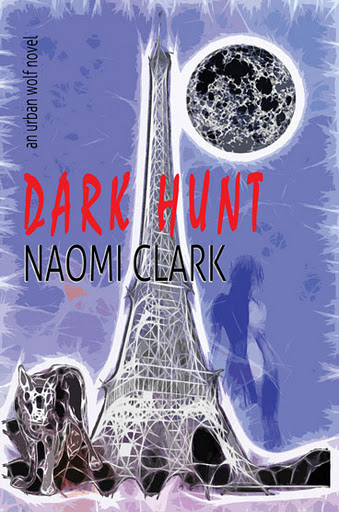
Today UK dark fiction author Naomi Clark hijacks my blog to talk about her latest novel “Dark Hunt” and offers some an interesting take on the perils of writer’s block


The Book I Didn’t Write

When I started work on Urban Wolf book 2, I knew exactly what I was going to write. I had a title (Bad Dogs). I had a plot (details not included – I might still use them elsewhere!). And, for a while, I had the first two chapters. I’d left some loose ends dangling in book 1, SILVER KISS, and I thought I’d use book 2 to wrap them up.
But then I got about five thousand words in and stalled completely. Every time I started working on the sequel, I hit a wall. I’ve never really had writer’s block before (I’m not entirely sure I believe in it), and I was stumped as to what had me stuck. I love these characters and their world, and I had a pretty good plot mapped out, so what was holding me up?
The answer is simple. I was bored.
My own writing was boring me. I wasn’t engaged with the plot I’d been so certain I wanted to write. And if I wasn’t engaged, how could I ask readers to get engaged? There’s a quote by Frank Robinson – “Be anything you want to be, but don’t be dull.” I was being dull. It’s hard to put my finger on exactly why I was bored but the fact was, Bad Dogs just wasn’t working for me.
So I wrote DARK HUNT instead. Now, I’d had this plot in mind for a while and I thought maybe it would be book 4 or 5 in the series. But I’d just come home from a holiday in Paris, the city was fresh in my mind, and given France’s rich trove of werewolf folklore, it seemed the ideal location for my new plot. I scrapped the five thousand words or so I had of Bad Dogs and started DARK HUNT. It was the right decision. Suddenly I was excited again! It was a challenge to take the characters I’d established in SILVER KISS and uproot them to take them to Paris, and I enjoyed translating my experiences of the city into the novel and making them Ayla and Shannon’s.
Will I ever write Bad Dogs? I honestly don’t know. I still like parts of the plot I had in mind, and maybe later in the series I’ll find a place for them. In the mean time, I hope everyone enjoys reading DARK HUNT as much as I enjoyed writing it!
We’re giving away plenty of swag in the DARK HUNT blog tour (http://tiny.cc/drkhunttour). There are daily ebook giveaways and hampers of goodies up for grabs at the grand finale of the tour including ebooks, limited DARK HUNT t-shirts, personal horoscopes and tarot readings by Naomi Clark, as well as postcards from Ayla, Shannon, Vince, Joel and Glory (urban wolf series characters). Leave a comment here (ask me a question; tell me about the books that have excited you (or just say hello!) with your email address to be entered.  Enter at each point along the tour for more entries and more chances to win.

Naomi Clark lives in Cambridge and is a mild-mannered office worker by day, but a slightly crazed writer by night. Her novels include Afterlife and Demonized. Her short fiction has appeared in ezines from Midnight Times to Dark Fire Fiction. You can find her on the web at www.naomijay.blogspot.com

Author Interview: Scott Nicholson

Today I’m interviewing award-winning horror author Scott Nicholson. Scott has written 12 thriller novels, 60 short stories, four comic book series and six screenplays. He’s also a freelance editor and journalist. He lives in the Appalachian Mountains of North Carolina.

  
What first drew you to horror writing?

I always found something a little dark in Dr. Seuss, or at least incredibly imaginative. I loved those Tales from the Crypt and Weird War comics with the six-page stories that always ended in a twist and several question marks. “The end–or IS IT?!!?”) And my grandmother told those old Appalachian folk tales and ghost stories. So while my first writing, besides the little comics I used to make, was more like Ernest Hemingway and Kurt Vonnegut imitations. But then Stephen King was the biggest writer on the planet so it made sense to try to be the next Stephen King.
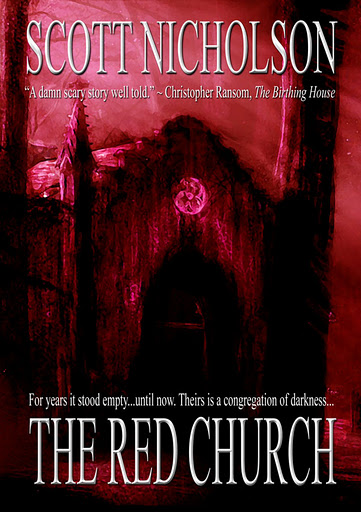
How did the idea for The Red Church come about – when did you know you had something worthy of a novel? 

I had written three novel manuscripts before I started The Red Church, and probably 40 or 50 short stories, so I’d figured out what I was doing by then. I had the idea from legends of a local haunted church, but it was really the main character Ronnie Day and just starting the story and remembering my own childhood that made it easy to write. It’s truly one of the biggest satisfactions of my career that the novel remains popular even 10 years later.
Many of your tales are set in Appalachia – does your inspiration come solely from the environment around you?

I have borrowed from local supernatural legends, and I love the magic of these ancient mountains. These are the world’s oldest mountains and I’m in the headwaters of the world’s second-oldest river, so it just feels like a lot of secrets and mysteries are here.
You’ve branched out into writing comics and children’s books…how did that come about. Writing a comic/children’s book is probably a lot less cerebral than writing a novel?

Well, since I started with Dr. Seuss and comics, it was natural to delve into them. Having children and listening to the odd, fresh takes on language is inspiring. They truly see with new eyes. I was an artist at one time,and although I’m not skilled enough to work professionally, I love seeing work come to life under talented hands.
Screenplays too; it would be quite a challenge to condense The Skull Ring novel into a workable screenplay?

I majored in video production and developed several short films, so I have some visual training. The only real difference is that everything must be shown, so dialogue and action are the most critical tools. Really, just strip away all internal monologue, find the essential traits of the characters, and keep the story moving, all the while imagining that you are sitting in the theater. Writing scripts for both screenplays and comics is a good way to expand my craft. I guess I’m just intellectually restless, or maybe just trying to figure out what I want to do when I grow up.
Your writing flows between horror, crime and mystery and thriller – which genre do you prefer to write in and why?

Funny, when I first started writing fiction with the intention of a career, I wrote in multiple genres. Part of it was I figured my odds would be better if I sent to multiple magazines at the same time, so I was hitting horror, mystery, fantasy, science fiction, and literary fiction all at the same time. I never even thought of it as consciously charting a course. Horror seemed to sell the best, although it was probably because there were far more small-press markets in that genre. When I sold The Red Church, I had novel manuscripts in several genres but it made sense for the publisher to stick with supernatural horror, so I did that for five more books. But I was writing other books while those were coming out, and I’ve self-published those now. I expect I will keep writing different things as long as readers let me. Readers are my boss now.
You’ve embraced the digital publishing age, releasing many of your books as e-books; what has the reaction been like?

Wonderful. I am so grateful I was here when this historic moment in publishing happened. I fulfilled the only goal I ever had with my writing in that it is now my full-time job. Everything else is just gravy. Everybody talks about money and numbers in the indie discussion, but the real advantage is freedom to write what you need to write. I feel a spiritual, moral, and artistic obligation to write because I want to share my ideas and views. Now each book has a chance to meet the reader that needs it.
Your own personal favourite tale and why?

I like The Red Church as a novel, and my favorite short story is “The Vampire Shortstop,” which I’ve made available for free at Amazon, Barnes & Noble, and Smashwords. Those just feel like the easiest stories to write, so they are probably the easiest for readers to connect with.
Ever written a story that hasn’t seen the light of day?

I have some that haven’t been published, but I will probably collect them and publish them later this year. I do have a few boxes of stuff from my teen years, and in my former life as a musician, I probably wrote 500 songs. I guess my life has just been one long series of dreams and scribbles and doodles and dribbles. Not so bad, all in all.
What advice would you give an emerging author?

Oh, just write and don’t listen to writing advice or publishing advice or anybody who thinks they know anything. People who think they are “experienced” are probably the worst people to listen to, because conventional wisdom is worthless in the realm of dreams. In writing, convention is to fail. So why not be unconventional?
Any upcoming new works?

Amazon is publishing Liquid Fear and Chronic Fear on Dec. 20, and I’m preparing for U.S. release of Creative Spirit at the end of December. I’m also working on a post-apocalyptic novel that should come out early next year. I’m currently working with translators to self-publish in multiple languages. I also have a couple of series I am writing with J.R. Rain and three or so more books to write next year. It’s a great time to be a lazy dreamer!
You can find Scott on the web at http://www.hauntedcomputer.com/

"The Noctuary" cover revealed!

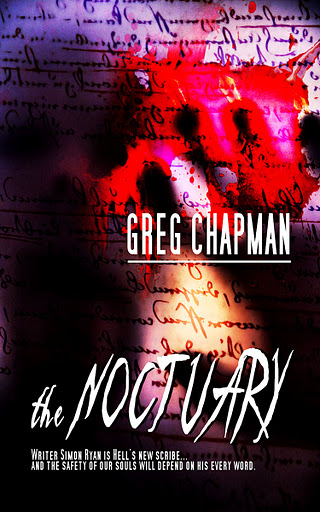
I can now unveil the cover to my forthcoming horror novella The Noctuary.

The cover, created by Damnation Books’ head cover artist Dawne Dominique, is deliciously dark and really captures the themes of the book well.

The Noctuary centres on Simon Ryan, a down-and-out writer, who receives a visit from one of the Dark Muses of Hell only to inform him that he is destined to become their scribe, helping them damn human souls by writing all manner of terrors into their lives.

To prove he is worthy, the Muses give Simon the chance to go back and rewrite a horrific moment from his past….

Simon will witness the true power of words first-hand and use them to make a shocking choice or lose his soul for all eternity.

The Noctuary will be released by Damnation Books as an e-book on December 1, with the paperback edition to follow.

Stay tuned for more information as we get closer to the release date and don’t forget you can purchase my first novella Torment in paperback or ebook NOW.

A Dark Discussion

On October 26, just days out from Halloween, I’ll be standing tall behind a podium to discuss all things horror!

My hometown library has invited me to give a presentation on horror fiction and how I broke into it and already the nerves are setting in.

I’m not nervous because I havent spoken in public before, rather I just want to make sure I do the genre justice.

Unfortunately there are many who tend to put the horror genre in a bad light (no pun intended!), so my aim of giving this talk will be to give them a better appreciation for the genre – that it’s not all just about blood and gore.

For me horror – and writing horror – is about peering into that part of the soul where fear and death lurks (because we’ve pushed it down there) and facing it. I also believe horror fiction, through its stories and tortured characters, has the power to show us who we really are.

I’m looking forward to giving this presentation and hopefully it will help persuade people to embrace horror fiction. I’ll also be signing copies of my novella “Torment” and there’ll be a short reading from my second novella “The Noctuary”, to be released on December 1 from Damnation Books. I’ll try and get that recorded and feature it in a future post.

So if you happen to be in my neck of the woods on October 26, about 7pm, then why not come along?

For more details, go HERE 

Repaying a debt

I’m taking a moment out from illustrating the Witches! graphic novel (still about 80 pages to go!) to talk about the Australian Horror Writers Association (AHWA).

To put it plainly I wouldn’t be a published author/artist if it wasn’t for this organisation and this post is a way of trying to repay the debt.


I joined the AHWA in 2009 and not long after, I secured a spot in that year’s mentor program with Brett McBean as my mentor. What I learned from Brett helped me find a publisher for my first novella “Torment”, but although the mentorship program ended long ago, the AHWA continues to assist me and hundreds of other horror authors on their journeys to publication.


The AHWA’s strength comes from its connections. The authors all go out of their way to offer support, guidance and a critical eye. The old saying “it’s not what you know, but who you know” is the very definition of the AHWA.

This leads me to the AHWA’s other strength – it’s dark fiction magazine Midnight Echo. The mag features fantastic fiction and art and my illustrations even graced the pages of issue 5 with the graphic story Allure of the Ancients in February this year.

I’d submitted a graphic story for issue 4 and although I was knocked back in that instance, it was the then art director Dave Schembri who connected me with Allure’s writer Mark Farrugia and eventual publication in issue 5.


Allure attracted the attention of US Horror Writers Association president Rocky Wood who was looking for an artist for a new graphic novel project – and Witches! was born.


So I guess it goes without saying that I owe a lot to the AHWA and all the people involved in it. For the past 18 months or so I’ve been in the role of media/PR guy for Midnight Echo magazine in an effort to repay the debt. 

The magazine just launched its new website: http://midnightecho.australianhorror.com and has started a major subscription drive with heaps of great prizes up for grabs. I encourage everyone to subscribe if you want to read some of the BEST horror fiction Australia has to offer.  
The AHWA, in conjunction with the Australian American Association is also in the midst of a fundraising campaign for Rocky, who was diagnosed with ALS/Lou Gerrig’s Disease, an illness that affects motor function. They are trying to raise funds to help Rocky buy an eye gaze device so he can continue to communicate.
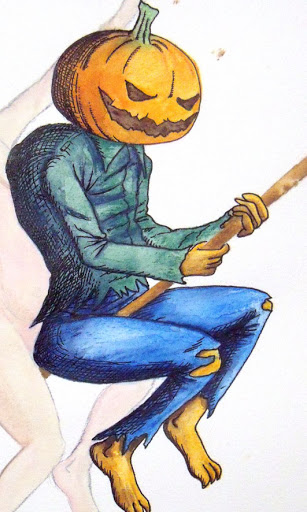
A Halloween Dinner Dance will be held in Melbourne on October 29 and will include an auction. I am donating two original pieces of art to the auction – one inspired by the Witches! graphic novel I am working on with Rocky and a colour piece combining witchcraft and Halloween (in progress – detail below). More info on all the items for auction can be found HERE and you don’t have to attend to bid.
If you’re a horror writer then I urge you to join the AHWA…. it’s a fantastic organisation that needs all the support it can get to allow it to continue supporting its unique community. To learn more about the AHWA visit www.australianhorror.com

Being social

My online presence is growing exponentially, with several websites and even an author page on Facebook.
I thought I’d put all my sites in one post to make it easier for those who want to Like, Follow, Tweet, Blog, +1 me or just connect!
You’ll find several interviews on Torment and my writing at these sites:
Reviews for Torment can be found here:
And of course my sites:


Author Interview: Amy Grech

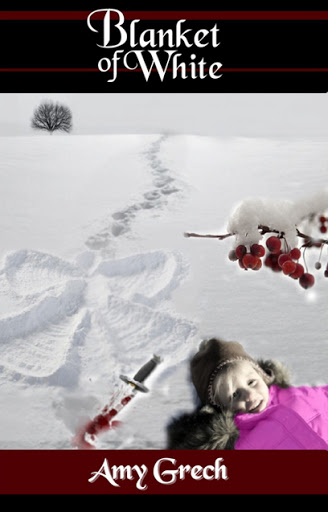
Amy Grech has sold over one hundred stories and three poems to various anthologies and magazines including: Apex Digest, Fear on Demand, Funeral Party 2, Inhuman Magazine, Needle Magazine, The Flash Fiction Offensive, The Horror Express, Space & Time, The Brutarian, Zombie CSU, and many others. Damnation Books published her second collection, Blanket of White.

She has a story in the upcoming Beat to a Pulp: Hardboiled. Amy is an Active Member of the Horror Writers Association who lives in Brooklyn. Visit her website: http://www.crimsonscreams.com.  Follow her on Twitter: http://twitter.com/amy_grech

1.      Why do you write dark fiction?
I was raised Catholic and all of those Bible Stories were downright scary, so religion is definitely a source of inspiration.

Writing is very cathartic for me; it’s a great way for me to work through my fears: loss of control and fear of rejection and get paid for it, too!

 2.     What made you decide to take up writing as a career and what was your very first paid writing gig?

I started writing seriously in high school after reading several of Stephen King’s novels; I was hooked on Horror at the tender age of twelve when an Aunt gave me a copy of Cujo during a family visit. I noticed there weren’t very may women writing scary stories, so I set out to chance that.
My first pro sale was to Shade Rupe’s Funeral Party 2 at the tender age of 24.  Jack Ketcum also had a tale in the book so it was quite a thrill!  I got to do a reading with some of the other contributors in Brooklyn.

3.     Who were your biggest influences in your early days of writing? Do those authors still inspire you?

My influences include: Franz Kafka, Jack Ketchum, Stephen King, H. P. Lovecraft, Joyce Carol Oates, Edgar Allan Poe, and Mary Shelley.
Absolutely!  I’ve known Jack Ketchum for years—we met at a Chiller Con in New Jersey. His story, “The Rifle” inspired my “Dead Eye.”  I’ve been reading Stephen King’s novels for years, so he’s a constant source of inspiration.

4.     Give us an idea of how you approach your writing.

 I’ll think up a title, like my story “Dead Eye,” which is slang for expert marksman; the tale follows a nasty progression as a young boy goes to great lengths to impress his father, a seasoned hunter.
Other stories are born from ideas jotted down in a little notebook I carry with me everywhere.  I’ll come back to those a few days after I’ve written them; if they still interest me, I’ll start writing!  Some ideas are dead-end duds!  They can’t all be diamonds…
Sometimes, I’ll get stuck on a project in progress. When that happens, I’ll put it aside and pickup another ongoing project.  That usually pleases my fickle muse and I’m off and writing again!

5.     What’s your preference – short tales or longer fiction?

For years I was content to have my short stories published in various anthologies and small press magazines until a more seasoned writer pointed out that I was literally selling myself short.  Since then, I’ve co-authored a novella, Fallen Angel with Michael McCarty; it sold fairly well, but the publisher folded, so we’re currently shopping it around.  I’m currently working on my own novella. 
Novelists tell me they find writing short stories extremely challenging because they’re limited by a limited word count.  For me the opposite is true; it’s taken me a long time to embrace the novella format.  I’m just now getting comfortable with all the extra wiggle room!  It’s been a challenge because I value quality over quantity.

6.     Your short story collection Blanket of White garnered a lot of praise. Tell us a bit about how the collection came about and the process of selecting the tales.

Blanket of White is a collection of 14 short stories, mainly horror, though there are a few sci-fi/horror hybrids as well.
“Blanket of White” was born from my desire to write a story devoid of sexual content.  Up until then, all of my stories focused on sex as erotic horror and several critics questioned if I could delve deeper into the human psyche. I’m pleased to say I can tackle any subject matter!  “Ashes to Ashes,” “Come and Gone,” “Perishables,” “Russian Roulette,” and “Cold Comfort” were all written in response to several break-ups with former boyfriends—I end to fall hard for a guy; consequently, I end up devastated when the relationship ends.  Writing is a very cathartic coping mechanism.  I wrote “Prevention” because I have a twin brother and wanted to play with the evil twin idea. I felt a little paranoid when I wrote “Rampart.” “Raven’s Revenge” was my homage to Edgar Allan Poe. I wrote “Damp Wind and Leaves” against the backdrop of Halloween.  I wrote “Crosshairs” as a tribute to my Catholic upbringing.  I wrote “Initiation Day” in college—I wanted to put a spin on the peer pressure high school students deal with.   I wanted to play with the expression, “You’re the apple of my eye.”  “Apple of My Eye” is the result.  I wrote “EV 2000” to deal with my fear of needles.

8.      What are you working on at the moment… any impending releases?
I’m currently expanding a short story into a novella set in NYC’s Alphabet City.  The story centers on a devious eye doctor, looking to let loose. Things get carried away when he meets Ruby, an 18-year-old writer at Anatomy Bar.  They witness the latest crazy among college students, Vodka Eyeballing, where they pour vodka shots directly into their eyes to get drunk faster.  Ruby invites the doctor back to her apartment near by.  They hook up and he kills her with his scalpel.  A couple of months later, he meets Gia, her older sister a piercing specialist/tattoo artist with scars on her face at a different bar.  She picks him up and invites the doctor back to the apartment she shares with her father, who has a nasty temper. He beats the doctor senseless in their living room then goes for the jugular with the doctor’s scalpel, payback for Ruby’s senseless murder.
The original story felt rushed and after feedback from the Editor who originally bought it, I decided to dig deeper.  So far, I have seven pages of notes I’m working from. This is the first project of mine that required extensive notes, but the story is much better for it!
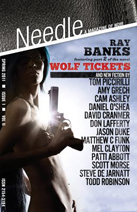
My crime story, “Alphabet City,” appears in the latest issue of Needle Magazine along with David Cranmer, Steve De Jarnatt, Matthew C. Funk, Tom Piccirilli, and Todd Robinson.
I have a story in the upcoming Beat to a Pulp: Hardboiled.
9.     What are you currently reading now?

I just finished reading a haunting, literary novel, The Particular Sadness of Lemon Cake by Aimee Bender about a little girl who can decipher people’s moods based on the food they cook.  To say more would give away several unique plot-twists, but I will say it’s well worth a read.

10.  If you could any advice to an up and coming writer, what would it be?

Write every day.  When I worked full-time, I’d carry a little notebook with my and jot down story ideas on my way to and from work on the subway.  Read, read, read!  Immerse yourself in award-winning books, so you know what works; also read books panned by critics, so you know what not to do!

DARKSCRYBE.COM

Stay informed with curated content and the latest headlines, all delivered straight to your inbox. Subscribe now to stay ahead and never miss a beat!

Skip to content ↓