Helping out the HWA for Halloween

This October the Horror Writers Association will be running Halloween Haunts on its official blog.

As well as Halloween-themed blog posts by members, readers will be treated to interviews, book excerpts and prizes. There will be something new every day, so if you’ve got a fetish for all things Halloween, then the HWA blogsite is the place to be.

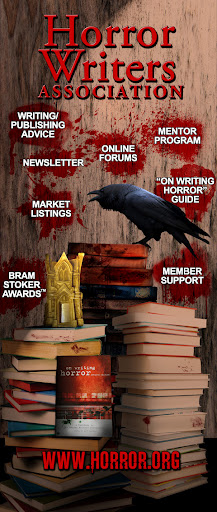
To help promote Halloween Haunts I’ve created a Facebook banner for HWA members – or in fact any horror aficionado to share! Just click on the image below and download.

A banner design I created for the HWA has also been on display at book conventions around the US and Canada recently. Check out these photos.

<<< I've also attached the banner for you to share on your own blog, website or social media site!

If you like my design work I can do something for you too. Contact me at midnighttheatre@hotmail.com

Writing under the influence?

A lot of writers and artists profess to writing while drinking a lot of coffee and sometimes alcohol.
Many other creators over the decades have created music and art while under the influence of mind altering drugs.
A recent survey found that editors/writers are the 4th heaviest consumers of coffee. Is this solely because they need to be up late at night to get any writing done – or is it simply a cheap and easy way to kick the writing brain into gear?
I don’t drink or smoke or take drugs. I limit myself to one coffee a day.
This might or might not seem odd to a lot of people, but my decision to abstain or limit these vices is purely for medical reasons (I have a history of heart arrhythmias) but to be honest I don’t think I’d produce very good writing if I had a few beers in me. It’s hard enough to focus the mind on fiction when I’m sober, so why would I want to hamper my synapses with alcohol (alcohol is a depressant after all)?
Or am I wrong? Do writers really feel different or more at ease with their prose while sipping from a brew – alcoholic or otherwise?
I’d be interested to hear some examples from authors on how coffee or alcohol has helped them with their writing – or hindered them?
At the end of the day, imagination is my drug and I’d gladly overdose on it anytime. J

Artist for Hire

I love writing; it’s in my blood and often spills out onto the page.
But I also have a penchant for art and design; so it makes sense that I combine the two. Witch Huntsis my first graphic novel, but certainly not my first piece of published artwork.
Over the past few years I’ve been creating new horror art pieces which can be viewed at my online gallery.
You can also buy prints of some of my work through my Deviantart page.
I’ve also recently been designing book covers and posters for fellow authors and this post is just a way of offering my services to anyone in need of a book cover, promotional poster or advert.
These are just some of the books covers and ads I’ve designed recently:

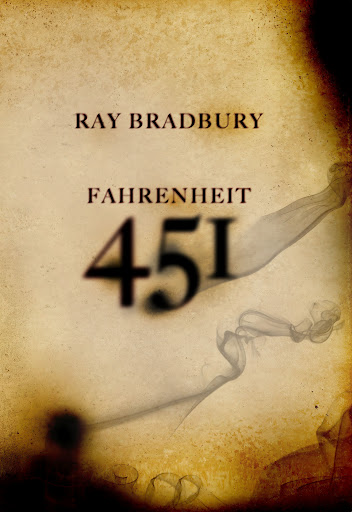
Simon & Schuster recently launched a competition to design a book cover for the 60th anniversary release of Ray Bradbury’s Fahrenheit 451. Unfortunately for me the comp is only open to US residents, but I couldn’t resist. This is what I came up with:

If you’d like to commission me for design work you can contact me at midnighttheatre@hotmail.com

Thicken your skin – sharpen your resolve

One thing an author or artist needs to develop very quickly to survive in this writing game is a thick skin.
I’m just new to this game, with only three novellas, a graphic novel and less than a handful of short stories published, so my opinion might not count for much, but I wanted to put this in writing, even if only to quell my own anxiety.
Bad reviews are going to happen – they’re a fact of life. You put your writing or art out there and it’s going to be criticised; torn to pieces even. It will hurt your very precious ego. You will read that review and feel absolutely gutted, enraged. You will even be tempted to respond in kind and promptly tell that reviewer that they don’t know what they’re talking about.
Don’t.
Accept very early on that, despite what you think, NOT EVERYONE IS GOING TO LIKE YOUR STORY OR ART. Accept that people are entitled to their opinion. Accept that this is the life of a creator and MOVE ON.
Rejections are the other bane of a writer’s existence. Even multi-published authors will feel its sting many times during the course of their career.
The only way to deal with these bad reviews and rejections is to keep writing, keep drawing. Do it for yourself every time.
I’m very happy with what I have created over these past few years. Just to be published is a privilege that you have to earn and foster. I may not be a best-selling author, but that doesn’t bother me. I’m a storyteller; if I’m not writing stories then I don’t feel complete. I’ll keep creating until I reach the grave and if people like what they read and see then great – and if they don’t – well they’re entitled to feel that way, just as I’m entitled to keep doing what I love to do, no matter what the bad reviews say.

Witch Hunts signing event in Melbourne!

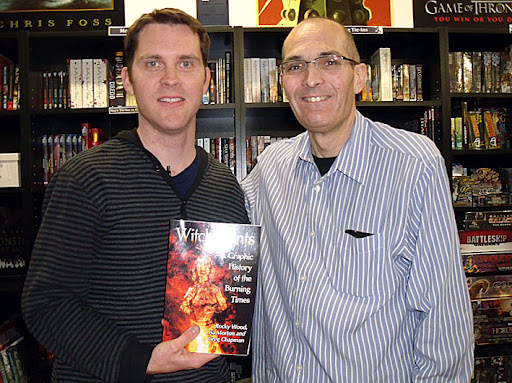
I’ve just returned home from a very memorable weekend in Melbourne where I finally got to meet Witch Hunts co-author Rocky Wood and join him in a signing event at a bookstore just outside the city.
After conversing with Rocky for roughly 18 months via email, I was very keen to meet him face-to-face and shake his hand and pour over the graphic novel we’d both worked so hard on.
Rocky very generously let me stay in his home for the weekend and I’m grateful for his hospitality. Rocky is a very determined and intelligent man and I find him to be an inspiration. His speech in the video below left me feeling very humbled:

It was also great to meet and catch up with some fellow dark fiction scribes, including Brett McBean, Australian Horror Writers Association president Geoff Brown, Matthew Tait, Shannon Gambino, Mark Farrugia and Talie Helene. Chuck McKenzie, owner of Notions Unlimited Bookshop was a great host and I was simply in awe of his store.

I feel very fortunate to have collaborated with Rocky and the only thing that was missing at the signing was the presence of Lisa Morton, who also authored the graphic novel. Perhaps, one day, all three of us will have the opportunity to get together.

Thank you to all those who came to the event and picked up a copy of Witch Hunts or my novellas. It’s great to know that the book has left such a positive impression on the people who’ve read it.
And don’t forget to get your reviews in at our Amazon or Goodreads page for your chance to win some of original Witch Hunts inspired artwork.

Guest Blogger: Author Christian Saunders

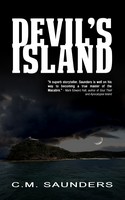
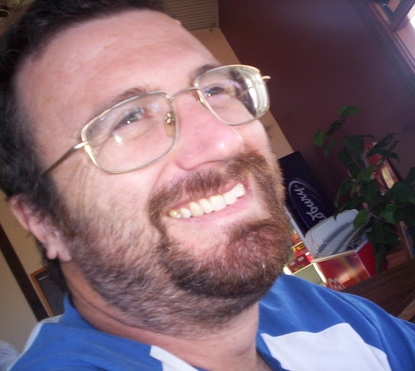
UK author Christian Saunders has just released his new horror novella Devil’s Island. Here he offers some sound advice on being careful when writing reviews of books online – even if they’re honest reviews!

Beware the Trolls!
A cautionary tale…
I like reading. A lot. I also like writing. Often, I combine the two and write reviews of the books I read and either post the reviews on Amazon or send them to magazines or websites I am affiliated with. I try not to ever give out-and-out bad reviews, because I understand how much time, effort and sheer hard graft goes into producing a book, even if it is not a great book. Besides, when reviewing I am very conscious of the fact that its a matter of personal taste. What I don’t like, other people might love, and my opinion is no more valid than anyone else’s. Generally, rather than publicize the perceived negatives I won’t say anything.   
Recently I posted a review of a book on Amazon.co.uk. It wasn’t a bad review, but neither was it a good one. The thing I took issue with was the hype surrounding the book, mainly generated by the editor / author (who I am pretty sure is the same person). Forgive me if I don’t drop names here, for fear of gaining that darn project any more publicity! The hype, though, extended to TV commercials and a viral marketing campaign, all of which I imagine was very expensive. The hype was mostly along the lines of, ‘This is the scariest book you will ever read!’
Oh, really? I mean, how do they, or anyone else, know that? Personally speaking, the scariest thing I have read in recent months has been my dentist’s bill.
The mistake I made was name-dropping my own book in the review, which I did out of instinct. My new book was recently published so I have been in ‘marketing mode’ for a few weeks now, posting my links etc. everywhere possible. Its not something I enjoy, but its necessary.
Anyway…
Somebody added a comment to my review, calling me a ‘self publicizing bell end.’ Who knows, maybe they were right, so I let the matter drop.
At least, I thought I did.
The next day I was notified that the books I currently have on release had attracted a whole wave of new reviews. I excitedly logged on to Amazon, only to find that every review was written by the same person, and every review was an awful 1-star shocker.
Now, the obvious questions would be that if this person thought my writing sucked so badly, why purchase everything I have ever written? Besides that, it would take some doing to read all four of my books in less than 24-hours. I also wondered how they managed to write a review of my first book, when it has been out of print since around 2006!
A little investigative work commenced, and I soon discovered via Amazon’s handy ‘See all reviews by this reviewer’ function, that the person currently engaged in a smear campaign against me had only ever published reviews by of ONE other author’s work… yep, the author of the book I originally reviewed. I compared writing styles, not just between the clutch fake reviews on my work, but across the board, and guess what? It appears to my eye that the author of the questionable reviews and the author of the original book, are one and the same!
Surely its immoral, and misleading, to post fake reviews of your own work under fictitious names? And even more so to then launch a malicious slander campaign against anyone who gives an honest opinion on it?
Both cases also violate Amazon’s terms of use.
Now a word about that darn book…
It’s an anthology, containing over 100 (yes, 100) short stories, though calling them ‘stories’ is a bit of a stretch of the imagination. Some are little more than mini-rants with no tangible plot. I have been around the horror scene for a lot of years, in many different capacities, and I can honestly say that I have never heard of any of the contributors. Nor, despite a Google search, have I heard of a magazine mentioned in the media campaign (and credited as being the source for all these stories) that claims to be ‘the biggest horror magazine in the UK.’
What’s more, a handful of the stories contained in the anthology are credited to the same guy, who also happens to be the ‘editor.’ All the stories are written in the same style and with the same tone, a style and tone which fits the negative reviews posted in the smear campaign quite nicely. I could be wrong, but this all leads me to strongly suspect that the same person is responsible for the whole she-bang.
I dug some more… This dude, allegedly, went missing in 2010 after moving into a haunted house in a UFO hot spot (how unlucky is that?), which begs the question, why did we never hear anything about him before this anthology? Which, incidentally, was first published in 2011, long after he supposedly went missing.     
Hmmm….
It is my opinion that the only thing this guy disappeared from is reality. Suffering the weight of an expensive, and ultimately unsuccessful marketing campaign, he now occupies his time writing fake reviews of his own work.
But what can you do?
I informed Amazon customer service, who asked for additional information and told me they would look into the matter. I trust they will do the right thing and take the offending reviews down. But that doesn’t change the fact that anyone who happens to look at any of my books between now and then will be met with some very harsh words written about me!
The moral of this story is…
Beware the trolls. 
To find out more about Christian’s writing visit http://cmsaunders.wordpress.com/

Author Interview: Lee Battersby

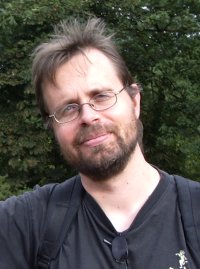
I’m very honoured to have Lee Battersby, one of Australia’s foremost speculative fiction authors agree to this interview where he talks aboput his forthcoming debut novel
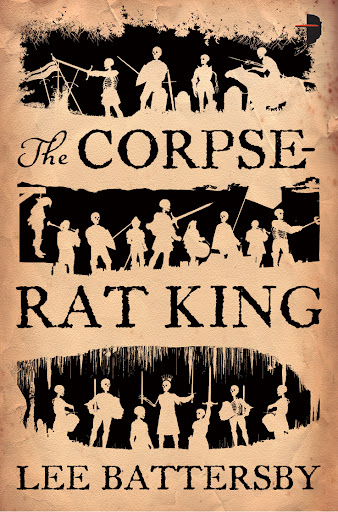
The Corpse-Rat King.

I was very fortunate to read an ARC of The Corpse-Rat King and you’ll find a link to my review of the book at the end of this interview. But now I’ll let the man speak for himself:

Tell us about your upcoming release The Corpse-Rat King from Angry Robot books. How did the story idea emerge?

‘The Corpse-Rat King’ tells the story of Marius dos Helles, a professional looter of battlefields and Olympic-quality coward, who is mistakenly acclaimed King of the Dead. The King is God’s representative on Earth, and they have not been admitted to the afterlife so they need one to talk to God and remind him that they’re down here, waiting. Once they realise that Marius is no King, they send him to find one. And as they say in the TV papers, hi-jinks ensue. It’s irreverent, highly cynical, and everyone says ‘fuck’ a lot more than they’re supposed to.
The idea originated from a dinner party conversation with Dave Luckett, a friend and fellow writer I’ve admired for many years. We were bemoaning some of the more obvious fantasy tropes, particularly those of the “everybody’s noble and shampoo seems to have been invented 500 years early” soft-focus variety. I started out to see if I could write something with some grit under the fingernails, and once I got started, my natural inclination to undermine everything and be ludicrous came bubbling out.
CRK is very character driven, one man’s quest to find the meaning of his life through his death. Does that mean Marius came into being in your mind easily and just how much did he drive your tale?
Marius is a fun character to write. He’s always looking for an angle; always willing to run away rather than do the right thing… he’s very much an extension of my belief about humanity in general. The entire story is about him: his reluctance to think beyond his own self-preservation, his unwillingness to assume responsibility, his journey from being utterly egocentric to becoming… well, not exactly philanthropic, but perhaps egocentric plus a couple of friends 🙂 
He’s centre-stage the whole time, because that’s how he sees himself. Everybody is the hero of their own story, and Marius takes that to the logical extreme. It takes a seismic shift to get him to see outside of his own welfare, and that’s half the fun of being a writer: taking a perfectly good, invented, human being, and fucking them up for 400 pages…
‘Marching Dead’ puts him at the centre of something bigger: too big for him to be able to remove himself from the welfare of the society around him. He has to evolve a conscience, and a sense of social responsibility, although it’s fair to say the growing pains are enormous.
Truth is, I don’t like noble characters much. Either they act nobly, in which case, where’s the character growth? Or they betray their own nobility, in which case you just think of them as shits because they’ve betrayed you. Much better to start with a character who’s honest to his own shitty nature and see if you can’t indulge him. That’s fun 🙂
You’ve had more than 70 short stories published in magazines across the globe and now you have your first novel. Was this your first attempt at writing a novel? Are there any other novels – finished or unfinished – gathering dust in a desk somewhere?
I’m currently finishing the first draft of a contracted sequel, ‘Marching Dead’, which I‘ll be handing in to Angry Robot sometime in the upcoming month. I did complete a novel before ‘Corpse-Rat King’ which a previous agent failed to place, and I’m a better enough novelist now that I’ll likely go back and rework that one over the next year or so and see if I can’t improve it sufficiently—the central idea is a good one, and it’s likely it’s just a shortfall in the author’s skill that’s let it down so far. At least, I hope so 🙂
I also wrote 52 000 words of a Father Muerte novel, ‘Father Muerte and the Divine’ whilst I was waiting for ‘The Corpse-Rat King’ to go through the Angry Robot Open Door Month process, and I’ll be going back to complete that. It’s my usual mish-mash of WTF moments and disparate weirdness: time-travelling Benito Mussolinis, intelligent dinosaur ghosts, Viking seer techniques….. when it’s written down like that I almost wish I was joking….
And I’ve got a few fun ideas waiting for me to get to them. I have an idea for a post-apocalyptic revenger’s tragedy I’m just foaming at the mouth to get to, and I’d love to write a Dying Earth fantasy, so if all goes well I’ve probably got enough projects to see me through the next three or four years.
CRK is the first in a series and at last check you’re 75,000 words into the sequel Marching Dead. Have you had much time to celebrate your success or have you been spending the evenings pounding the keyboard?
There’s no real success yet: I don’t consider selling the novel to a publisher a ‘success’ as such, because that’s what I was aiming to do in the first place. As pleased as I am to sell to someone like Angry Robot, it’s really just a case of job done, and completing the first step towards establishing a long-standing career as a novelist. The success will come if this novel sells well to the public, if it’s well-received, if it opens up new opportunities, if I can translate it into ongoing relationships with my agent and publisher… all things I would like, but over which I have zero control. Success is something I like to look back on, and right now I’m neck-deep in the process, so hopefully I’ll be able to look back on this period in a couple of years and pinpoint it as a successful beginning.
Your wife Lyn Battersby is also an esteemed writer – does that also make her your biggest critic? How much input did she have on CRK?
Lyn’s an astonishingly good writer: far more emotionally subtle and humane a writer than I am. She’s very quick to see if I‘ve become lazy or repetitive in my use of themes or approach, and she’s got a very good radar for those things I do that work, or which I need to spend some time improving. She didn’t have a massive amount of input into CRK, largely because she’s trying to fit her own writing in around working and studying at Uni, so pushing my stuff in front of her would have taken her away from her own stories, and I’m selfish in that I enjoy reading her stories so would rather she write one than read one of mine.
You work for Rockingham City Council – in the arts? You’ve administered some projects around writing, like story competitions. Can you tell us about that?
I’m the Coordinator of Cultural Development and the Arts, which means I bear responsibility for the promotion of arts practice within the City. There are over 100 000 people in the region, and engagement with the arts is an important factor in establishing and maintaining an active lifestyle. In regards to our literary programme, we’ve established an annual short fiction competition that utilises an image from the City’s Art Collection as its thematic base each year, and have incorporated a poetry competition as part of our annual Castaways Sculpture Awards. We participate in National Novel Writing Month through managing the Rockingham/Mandurah nano-region, and run a series of workshops in the months leading up to November where local writers can work with established pros: in the past we’ve worked with Kate Eltham, CEO of the Queensland Writers Centre, as well as authors such as Bevan McGuiness, Sherri-Ann Jacobs, Simon Haynes and Juliet Marillier, and we’ll be running workshops with Stephen Dedman and Amelia Beamer as part of this year’s program. We also ran a writing marathon last year called ‘The Night of Writing Dangerously’ as part of our ‘Nano’ program, and will be doing so again this year.
What we try to do is bring authors from the region together and help them build their capacity to work within the literary industry, and then provide opportunities to do so within a national framework. Last year we received short story entries from around the country, and the poetry competition even attracted entries from the US and Canada, so local authors have a chance to benchmark themselves against a wide range of other practicing authors, which can only be good for their development and the development of the literary arts in the region.
All of which is a very formal way of saying that we try to advance the literary arts by putting local authors in touch with established industry pros, give them outlets to practice their art, and try to help them think in new ways about their art and the industry in which they work.
 How do you see speculative fiction now with the emergence of the e-book and small press, particularly in Australia?
The small press has always been a major part of the Australian publishing scene: in terms of sheer population we just can’t support many major publishers, so those we do have play the game of highest numbers and can be conservative as a result. The small and micro-press scenes are really vibrant, and fascinating, and I’ve enjoyed being a part of it over the last decade or so. If I ever get my shit together and work towards a doctorate I’ll probably base my studies around the small-press culture and how it propagates.
As an author, though, I can’t quite get a handle on the e-publishing scene, particularly the self-publishing model. It seems particularly labour-intensive, in an industry where outlets already exist to take administrative tasks away from me and let me just get on with writing, and I’m not convinced that the economic payoff is there unless you have an already established reputation. I can see the benefit of releasing reprint material into the electronic market, but given the proliferation of electronic publishing clauses in traditional contracts these days I’m very cautious about the benefits of electronically self-publishing original material rather than bookending it onto a ‘dead-wood’ publishing deal.
That said, I have friends in the industry who are utterly convinced that the book is dead and we’ll be completing the full publishing cycle electronically within the next few years. Kate Eltham, for example, is highly articulate—not to mention far cannier than me—on the subject, and I’ll more than likely just steal all her ideas in a couple of years and look back on this interview with rolling eyes…
Who’s your favourite author (deceased)? Who’s your favourite author (still living) – and why?
God, end with an easy one, why don’t you? 🙂
Too many to name. Far too many. I’m a total bibliophile. Right now I’m re-reading Gene Wolfe’s Book of the New Sun series, so right now it’s Wolfe, but on any other day it’ll be Palahniuk, Lethem, Waldrop, Pratchett, Aldiss, Mieville… how long have you got?
My tastes tend to run towards people who straddle a line between genres: slipstream, or interstitial fiction, but that’s not absolute. Rather, I’m voracious. I’ll try anything once.

Review: Corrupts Absolutely? edited by Lincoln Crisler

Publisher: Damnation Books
ISBN: 978-1-61572614–1 (eBook)
Published: 13th April, 2012
Words: 83,780
Description:
Corrupts Absolutely? collects twenty brand-new stories from veteran authors and newcomers, each with a unique perspective on what it might really be like to be superhuman in today’s day and age. In the center of such a roiling mass of uncertainty and excitement lies one important truth: the fight against good or evil is never as important as the fight for or against oneself.
(Review first published at Thirteen O’Clock, June 2012)

Given I was raised on comic book superheroes like Superman, Batman, Spider-Man, the X-Men, The Teen Titans and others, the meta-human fiction anthology Corrupts Absolutely? was always going to have instant appeal for me.

Edited by dark fiction author Lincoln Crisler, Corrupts Absolutely? Sets out to take comic book heroes beyond the confining rectangular borders of comic pages into a prose format and, when taken as a whole, the stories pack as much punch as The Incredible Hulk on a bad day.

Borrowing from some of the more adult comics and graphic novels of the 1980’s, like Watchmen and V for Vendetta, the heroes (and villains) in these 20 tales are as human as the rest of us, with troubled pasts, crises of conscience and revenge on the mind. The theme of the anthology centres on how power can corrupt and each story rides that theme like a speeding bullet into catastrophe (ok enough of the metaphors).

From the very first tale – Tim Marquitz’s “Retribution” about a nuclear-powered man who exacts explosive revenge on a Middle Eastern village on the anniversary of the September 11 attacks – you know immediately that the interpretation of what is a “hero” in this volume, will ride a very thin grey line indeed.

In my view, the strongest tales are in the first half of the book. Bram Stoker Award-winning author Weston Ochse’s piece “Hollywood Villains”, about a young man who can make anyone do anything not only forces you to sympathise with the villain as he psychically torments some of Hollywood’s more unsavoury characters, but makes you feel that his victims deserved it.

Jeff Strand’s “The Origin of Slashy” focuses on the victim of a rape who decides to become a vigilante and kill men with sex on their mind. The matter-of-factness of Strand’s writing adds considerable impact and there’s certainly no hero in sight in his story.

Edward M. Erdelac’s “Conviction” is a fantastic gangsta style tale about a young man trying to distance himself from the wrong people, only to be pulled back in. Erdelac captures the language and character of Abassi exceptionally well and provides imagery that lasts well after the final sentence.

Other standouts included the darkly atmospheric “Mental Man” by William Todd Rose, Joe McKinney’s “Hero”, “Crooked” by Lee Mather, “Acquainted with the Night” by Cat Rambo and “Max and Rose” by Andrew Bourelle. “Gone Rogue” by Wayne Helge, a humorous tale that reminded me of the film Mystery Men was a welcome addition to break up all the angst.

The only downside to the anthology was that there were possibly a few too many stories that reminded me of a certain rich billionaire with a mechanised suit.

All in all, Corrupts Absolutely? was a great escape, providing very interesting pastiches of heroes and villains. Hopefully Mr Crisler might consider putting together a second volume in the not too distant future?

Author Interview: Martin Livings

Martin Livings’ new tale Rope is now available in e-book format from Dark Prints Press – along with my novella Vaudeville.

I managed to nab Martin for a quick interview (make sure you check out the interview he did with me over at his blogsite)
– Tell us a little about yourself. Who is Martin Livings?
Ah, the eternal question. Who am I? Where did I come from? Well, I live in Perth, have a beautiful wife and a precocious guinea pig, love horror movies, and for twenty years this year I’ve been publishing short stories in as many different places as I can possibly manage, with over seventy acceptances so far. My first novel, CARNIES, was published by Hachette Livre in 2006, and was nominated for both the Aurealis and Ditmar awards, which was really gratifying. “Rope” is my first eBook, and I’m excited as hell to see it in the wild!
– Where did the inspiration for “Rope” come from?

 “Rope” was originally written for a proposed Western Australian horror themed four-novella collection, with stories written by three WA horror luminaries and, er, me. The collection didn’t end up happening, though, and I believe all three of the other stories have since found good homes and critical acclaim, but “Rope” went in my bottom drawer until Craig from Dark Prints started asking for novellas. The rest, as the cliched say, is history. A good part of the inspiration for the story itself came from the fact that my mother actually went to school with Eric Edgar Cooke, the last man to be hanged at Fremantle Prison. That sparked the idea of looking at all of the executions that occurred there, so I dove in to the research and read detailed accounts of all forty-four hangings that took place in the prison. I realised that people always talked about the crimes and the aftermath, but very little attention was paid to the act of the hanging itself, probably because it’s not a very nice subject. Reading newspaper accounts of forty-four hangings, then writing about them, wasn’t necessarily the healthiest of things to do to my poor brain; I had bad dreams for weeks, which probably helped in the creative process in the end! I just wanted to explore what it would be like to witness so many deaths, to be responsible for them, and yet to believe yourself to be a good person. How it would change you. The story wrote itself from there, pretty much.

– What can we look forward to seeing from you next?
I’m incredibly excited to be launching my first short story collection, LIVING WITH THE DEAD, at the beginning of October at GenreCon in Parramatta. This collection is also from Dark Prints Press, and is basically my greatest hits compilation, the best of twenty years of hard horror slog, with twenty reprinted stories and three brand new ones. I can’t wait for this to come out, it’s going to be awesome!
– And finally, Beatles or Stones?
Beatles, duh! 

"Vaudeville" released!

My latest novella, Vaudeville, a coming-of-age horror tale, is now available to buy as an e-book from Dark Prints Press.

This is my third novella, with my previous works Torment and The Noctuary, being published by Damnation Books in the United States.

I’m very glad that Vaudeville found a home with an Australian small press, especially Dark Prints, as Craig Bezant is doing some great things for the genre.

Vaudeville and Rope, by West Australian author Martin Livings, are the first two titles to launch DPP’s e-novella series and I feel very privileged to be sharing the stage with Martin.

For more information on Vaudeville and how to buy a copy go HERE.

DARKSCRYBE.COM

Stay informed with curated content and the latest headlines, all delivered straight to your inbox. Subscribe now to stay ahead and never miss a beat!

Skip to content ↓