From the back of the desk drawer

When I was at university studying journalism in the late 90’s I enrolled in Literary Theory as an elective. After the first lecture I questioned whether I should drop out of the course. What I really hoped to get out of the course was to learn the art of writing (as if it had a recipe). How wrong I was. The course was all about pulling apart a story, looking for hidden meaning; to examine what the story was saying about the author. I’ll admit I was a bit disappointed.
Until I found The Fall of the House of Usher by Edgar Allan Poe in one of the textbooks. Given my own dark musings, I fell in love with that story and its author and my desire to write horror professionally was kicked into first gear.
Thankfully my final assignment for the course was to write a short story and of course I wrote what was essentially my first horror tale.
Entitled Lamentation, the story concerns a young woman who discovers she is carrying the child of her narcissistic lover – a child that is the reincarnated soul of a man her lover supposedly killed a year before.
While searching my old CDs I found this story and gave it a re-read. It certainly wasn’t the best story in the world, but it was my first after all. My initial thought was to put the CD and the story back in the drawer, but then I wondered if I could improve it, by giving it a rewrite. I’m still in process of doing that and maybe it will see the light of day soon.
This also got me thinking about another story lying neglected in my drawer – a thriller novel entitled The Passion Play, which I wrote before I went to university. As the name suggests, the book is about a serial killer who  forces his victims to relive the last moments of Christ. It might be a little bit too religious, but I wonder if it might be worth revisiting as well. A professional manuscript appraisal thought the story would be worth the revision so why not?
I guess that begs the question – what unpublished stories do you have lying in your drawer and would you ever consider bringing them out of the dark for the world to see?

Paper or Pixels?

Just last week I had to clean out my office so it could be painted. Amongst all the dog-eared paperbacks, art materials, blank notebooks, Doctor Who figurines, hand-crafted Father’s Day presents and old photographs there were fragments of notepaper, all bearing the scrawl of me, the mad writer.
Seeing all those pieces of paper scattered like leaves around the room, I suddenly realised how much of a hoarder I am. Not just of paraphernalia, but of ideas. I never have any trouble coming up with story ideas, what I do have trouble with is actually getting around to bringing all of them to life.
My wife’s solution was simple – write the ideas down yes, but then transcribe them into the computer and throw the piece of paper away. Makes sense doesn’t it? I guess this comes back to my aversion to typing stories into the computer. Personally I hate it, but I know many authors who write that way. I find writing freehand is cathartic and the story seems to flow out of me as I run my hand across the page. My handwriting is hard to read sometimes, but it’s mine.
The prospect of throwing those notes away is daunting because I’d feel like I was throwing pieces of myself away. The same goes for my collection of books – if I put them in a box to go to Lifeline or elsewhere, I’m not just throwing pieces of me away, but the ideas of the authors I admire as well. Is that disrespectful? I believe it would be, therefore those novels will always have a place on my shelf.
Amidst all this reflection and re-organising, I was having a problem with my new e-reader, a Pico Life. It was a good e-reader; colour screen for one, but then it just stopped holding its charge. I always wanted to get a Kindle, but couldn’t afford one at the time. I took the e-reader back for a refund and bought myself a Refurbished (secondhand) Kindle. Even without the colour screen, it’s still fantastic. Books are downloaded in 20 seconds and it feels so good and light in your hands.
But when I was reading from the Kindle the other night, that twinge of betrayal crept into my subconscious again. I was lying there reading from a machine, while next to me my wife was reading a paperback copy of The Girl with the Dragon Tattoo. This is the eternal argument – how is a book meant to be read – via a screen or from the page?
For a moment I felt like I was throwing away a piece of myself again by not indulging in the printed page, the smell of ink on paper. I’ve always said that e-books and e-readers are simply new tools for writers to reach their audience, but is it better to hoard as many books as we can in case the screen becomes the norm?

I’d love to know what you think.

Thanks 2011 and Bring on 2012!

2011 has been a great year from a writing perspective, but 2012 is looking even better!


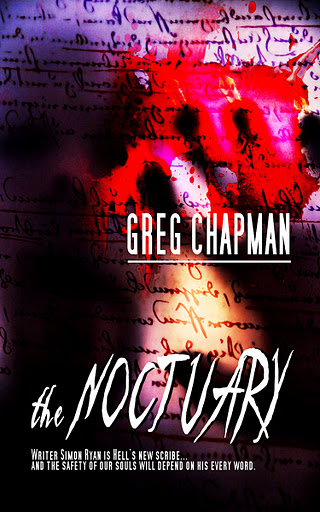
In the past year, I’ve had two novellas published by Damnation Books “Torment” (March) and “The Noctuary” (December) and a few short stories. Reception to both novellas has been positive, but as I am an emerging author it seems to be taking readers a while to get on board and take a chance on me. I’m hoping 2012 might give them a bit more of an incentive.


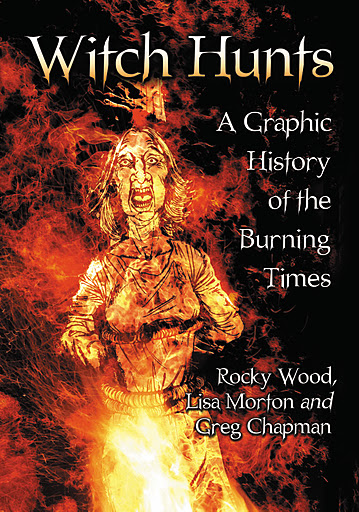
Last year saw me return to the drawing board literally as I was fortunate enough to be commissioned to illustrate the non-fiction graphic novel Witch-Hunts: A Graphic History of the Burning Times, written by Bram Stoker Award nominee Rocky Wood and multi-Bram Stoker Award winner Lisa Morton.


This project had me illustrate more than 170 pages, depicting everything from the creation of the Malleus Maleficarum to scenes of gruesome medieval torture! But the graphic novel is not all horror – it’s an in-depth analysis of the causes, impact and repurcussions of the witchcraft craze that invaded Europe during the Dark Ages. I’m very proud of the work I produced for the graphic novel and I believe it will be well-received when it is released in early 2012 by McFarland Publishers.


I feel very privileged to have been able to work with two of the most respected people in horror and I’d also like to thank the Australian Horror Writers Association for helping make it possible.


Now that Witch-Hunts is in the hands of the publisher I aim to get back into writing and getting published and rest assured you will see more books from me next year.


On Christmas Eve I received some great news when Australian publisher Dark Prints Press emailed me with an acceptance letter for a new novella “Vaudeville”.


Vaudeville will be one of the first e-book titles on DPP’s new novella series, to be launched in the first half of 2012. Here’s a taste of what Vaudeville is about:


One year has passed since Anthony Moore’s father was found hanging from a tree in Keaton Woods.
On the anniversary of his father’s death, Anthony ventures into the woods in search of the truth about how his father died, but the truth is hungry – and waiting for him.
Vengeful demons, exiled to the woods more than a century before, are eager to escape and Anthony considers giving them their freedom, when they offer the answers he seeks.
“The All-American Travelling Trobadours” have a dark story to perform – all they need is audience of four young souls.
Vaudeville is a coming-of-age horror tale, touching on themes of grief, loneliness and the darkest days of the American Civil War.


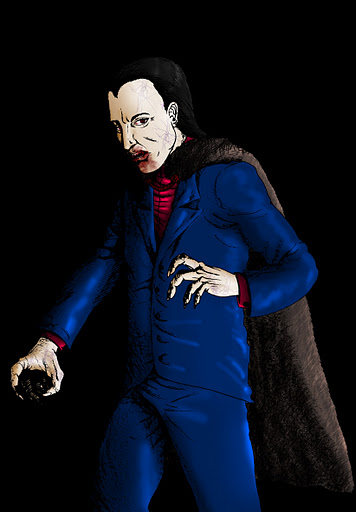
Some more drawing will also be on the agenda after Midnight Echo Magazine late last year agreed to publish several new installments in the Allure of the Ancients vampire graphic story series that first appeared in issue 5.


The series, written by author Mark Farrugia and illustrated by me, will look at the origins of the series central vampire character Rahkh. It will kick off in issue 7, due to be released in February or March.


So 2012 is already looking pretty damn good, but there’ll be no rest for the wicked as I’ve still got a Halloween-themed novella to finish and my first novel to write.


So keep an eye out on my Facebook author page and Twitter account for updates and news on my future writing and illustrative endeavours!


And a Happy New Year to everyone!

What happens on tour stays on tour

So the blog tour for my new release The Noctuary is over … but I must say it’s been a great success!
The word about The Noctuary was heard far and wide with reviews and guest blog posts appearing all over the internet for two weeks, thanks to the wonderful promotions company Pump Up Your Book!
Reviews of The Noctuary have been very positive with many readers enjoying the darkness within its pages. The guest posts gave potential readers an insight into how I came up with the idea for the book and of course there were a few author interviews as well.
There were a few minor hiccups with some of the blog posts not appearing, but my PUYB! rep was quick to find me new spots to replace them. I’d recommend PUYB! to any author looking to promote their book.

I’ve found that using PUYB has certainly helped me to get myself out there more when I wasn’t able to before.

For those who may have missed all the blog posts and reviews I’ve compiled them all below. There were a few additional guest posts and interviews outside the blog tour as well:

Reviews

ALCHEMY OF SCRAWL

MAD MOOSE MAMA

LITERARY PURSUITS

MUST READ FASTER

REVIEWS BY MOLLY

THE TOP SHELF

HELLNOTES

ANTIBACTERIAL POPE

Guest posts

INKY BLOTS

MAD MOOSE MAMA

THE STORY BEHIND THE BOOK

THE TOP SHELF

LINCOLN CRISLER’S BLOG

 
BOOK EXCERPTS

BENJAMIN KANE ETHRIDGE‘S BLOG

LISA MORTON‘S BLOG

Interviews

THE EXAMINER

GARY W OLSON‘S WEBSITE

THE DARK FANTASTIC

JENNA ELIZABETH JOHNSON‘S WEBSITE

ONE HOT MESS

THE HOT AUTHOR REPORT

If you wish to purchase a copy of The Noctuary in paperback you should visit AMAZON or BARNES & NOBLE.

The novella is also available as in e-book in multiple formats, including epub, mobi and PDF from DAMNATION BOOKS

Don’t forget my previous novella TORMENT is also available.

Guest blog: Lisa Morton

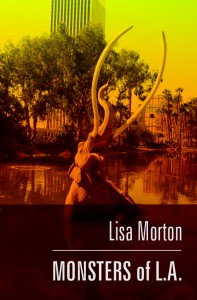
Multiple Bram Stoker Award-winning horror author Lisa Morton has hijacked my blog to talk about her new short story collection Monsters of L.A. out now from Bad Moon Books!

At some point in 2010, I looked at the last few works of short fiction I’d written and I realized they all had an odd theme in common: They were all about monsters, and they were all set in contemporary Los Angeles. One, for example, was based on an urban legend about a catwoman roaming the hills just northeast of the city; another was about a real historical figure named G. Warren Shufelt, an engineer in the 1930s who claimed to have invented a device that detected gold beneath the streets of L.A….gold left behind by a race of lizard people.  As soon as I noticed the similarities in these stories, I thought I might have the makings of an unusual collection. The remaining fifteen stories in Monsters of L.A. were written in a frenzied outpouring of just a few months.
So, what is it about this intersection between monsters and my hometown that I find so compelling? Let me state one thing right off the bat: I really do love Los Angeles. I was born here (or slightly east, in the San Gabriel valley city of Pasadena) and have spent most of my life here. During my teenaged years when my family lived in San Diego, I couldn’t wait until I learned how to drive so I could come up north to L.A. every weekend. Aside from its remarkable weather (I’d fit right in with those afore-mentioned lizard people, because I like the sun!), there are two things I’ve always most loved about the Los Angeles environs: 1) the mishmash of ethnicities and cultures here, and 2) the creative industries crowding the landscape. We’ve got (of course) Hollywood, but we also have a thriving literary scene, and we’re pretty happening for music and fine arts, too. On a day off, we might have fantastic dim sum in the largely-Asian Monterey Park, check out the latest exhibit at MOMA (Museum of Modern Art), and maybe shop and eat at Olvera Street (yes, I know it’s kitschy and touristy, but one restaurant there, El Paseo, makes a fine mole sauce!). I’ve worked on-and-off in the film business since I was 20 (and as a screenwriter since I was 29), but I’ve also spent a lot of time managing L.A. bookstores and being part of our local community of horror writers, which includes Ray Bradbury, Richard Matheson, RC Matheson, Dennis Etchison, David Schow, Peter Atkins, John Skipp, Cody Goodfellow, Del Howison, Jeff Gelb, Roberta Lannes, and dozens of others. Welcome to my family.
I got to know one of those writers – Dennis Etchison – long before I started writing horror fiction, and Dennis’s brilliant work, which is almost always set around Southern California, was hugely influential on me. Like Dennis, I know that L.A. isn’t just about beaches and vapid blondes; I see its darker side, too. I see the homeless, many of whom probably came here to make it big in the movies or the recording industry, and now they’re as shattered as their dreams. I see the narcissism of those who have succeeded, and the delusions of those who still believe they will succeed. I see buildings that are falling to ruin because their owners simply couldn’t afford to keep them open and repaired.  I see Caucasian and Asian and Latino, gay and straight, rich and poor, mixing…but not always comfortably.
Once you become aware of all these less pleasant aspects, it’s not hard to see how they resemble certain classic horror archetypes. Isn’t there something haughty and arrogant and movie-star-ish about Dracula? Aren’t the hopeless meth junkies hiding from their pasts a bit like the Phantom? What are the La Brea Tar Pits if not a black lagoon?
I also wanted my collection to provide a complete emotional experience for the reader. Just as L.A. can induce blissful living or desperation, the joy of success or the constant dulled grief of the most abject failure, so my collection would move from the humor to be found in a giant monster menacing Santa Monica (really, who hasn’t laughed at a Godzilla movie?) to the frustrations of a gay teenager to the horrors of modern technology. I also wanted the storirange from flash fiction to a novelette (the story involving those lizard people), with some interconnecting and even depending on each other. Kind of like how all of us who live in L.A. have to mesh.
I hope SoCal residents who read Monsters of L.A. will nod in recognition, while those who’ve never been here will end the book feeling almost as if they have. And I won’t object at all if you tell me that the book made you feel like there was something dark here lurking beneath all that sunshine.

Thanks for stopping by Lisa! To buy a copy of Monsters of L.A., visit Bad Moon Books! ond make sure you visit www.lisamorton.com

Author Interview: Gary W. Olson

Gary W. Olson may be new to the horror fiction scene, but he’s already well on his way with his debut novel Brutal Light, which was released by Damnation Books on December 1. He took the time to answer a few questions about the book:
Tell us about your forthcoming book Brutal Light. Going by first appearances your tale seems to be your typical good versus evil tale, but with a twist on the norm with light having negative connotations. Is that the case?
Somewhere in my readings–unfortunately, I no longer have notes as to where–I encountered a description of a rather extreme form of asceticism.  In it, all flesh–and possibly all matter–was considered imbued with sin and darkness, and the only way to escape this darkness was through intense prayer, self-flagellation, and other such masochistic practices.  It was a stark worldview, admittedly, one that carried the formula of ‘light equals good and dark equals evil’ to extremes, but it got me to thinking about what we mean by these terms.  If the difference between ‘light’ and ‘dark’ really was this stark, how many of us would really be willing to go to these ascetic extremes to avoid ‘evil’?  How many of us would rather just redefine the terms so that they’re not so terrifying?
It’s not that the Radiance–the ‘brutal light’ of the title–is negative, per se.  It’s more that it may be more than our finite minds might be capable of processing if we ever truly experienced it prior to dying.  Nor is it necessarily true that ‘darkness’ is synonymous with ‘evil’, the protestations of any ascetics notwithstanding.  I tend to see it as all that our finite minds can encompass, with all the elements of ‘good’ and ‘evil’ as we understand them contained within.  The conflict between ‘light’ and ‘dark’ becomes very different in this context.
This is your first novel, undoubtedly a writer’s most important work – give us a bit of an insight into how you began – where the idea came from, how long you worked on it for etcetera?
I’ve long been fascinated by the subject of power–its nature, its effects, the lengths people will go to get some, and why they want it so badly.  I wrote stories in the nineties that involved characters who either strove for or ultimately achieved some form of limitless power, and had to contend with the consequences–temptation, corruption, hubris, and so on.  When I started attempting to write novels later on, I continued with and expanded on these themes.
It wasn’t until I encountered a quote by Arundhati Roy–‘respect strength, never power’–that I found a focus for my exploration of these themes in Brutal Light, though.  Power comes from without–it ‘grows from the barrel of a gun,’ to paraphrase Mao.  Strength comes from within.  The story, then, centered on the pursuit of power as a substitute for strength, and the consequences.
Why horror/dark fantasy?
Dark fantasy and horror are excellent vehicles for exploration of questions of identity, for coming face to face with ‘who we really are,’ and having to make choices following this revelation.  It uses some very visceral tools, from atmospheric dread to flesh-eating zombies, to heighten the impact.  There’s nothing like a demon for uttering a harsh and merciless lie–or worse, a harsh and merciless truth.  The prospect of having to look beneath the identity we create for ourselves and seeing what–if anything–is beneath the comforting words and conventions is a quietly terrifying idea for most people.  Exploring this in a horror context raises the volume in a big way.
What was your first foray into dark fiction?
My first dark fiction foray was a short story I wrote in the late nineties called “The Body in Motion.”  It was set on an Earth so far in the future that the sun had begun its expansion into a red giant, and the remnants of humanity were kept barely alive in deep underground chambers while the Artificial Intelligence charged with saving these remnants experimented with a radical means of doing so.  It appeared in Outer Darkness magazine in the Spring of 1999.
Working on anything new at the moment?
Two things.  One is the sequel to Brutal Light, which is threatening to grow beyond all the bounds I want to set for it.  I can’t tell too much about what will be in it at this point, without spoilers for Brutal Light, but I can say it will have a lot of nasty, multi-legged, memory-devouring bugs.
The second, and the one that will likely be completed first, is Entering Cadence, a science fiction novella set in a settlement in a jungle on an alien world.  None of the races are there by choice, and none can stop more members of their races from arriving.  Then someone who does seem to have at least some of the answers arrives… but he may not be allowed to live long enough to spill them.  It’ll be a pulpish adventure with strong dark elements to it–it should be a lot of fun to write.
Your influences/ favourite authors?
There are so many of these.  Isaac Asimov, Arthur C. Clarke, and Frank Herbert were strongly influential to me growing up.  Stephen King and Clive Barker gave me a taste for visceral, weird horror.  Philip K. Dick, Avram Davidson and Terry Pratchett all influenced me with their inimitable voices and ways of taking something apart and looking at it in new ways.
Do you have a writing regimen?
Unfortunately, I’m not as ‘regular’ at writing as I used to be.  I tend to carve out time wherever–in the morning before I go to work, in the late evening when I should be sleeping, at odd times on the weekend.  Every time I tell myself I’m going to get organized and write consistently for a certain length of time starting at a certain time and ending at a certain time, it never seems to work out.  But the writing gets done anyway, so I don’t fret much about it.
When you’re not dreaming up dark delights what do you do to pay the bills?
I’m a software engineer/data warehouse analyst for an insurance company.  As day jobs go, it’s pretty good–I’ve always enjoyed programming work, and the process of tracking down problems and fixing them requires a lot more creativity than I think most people expect.
Where can people find you on the web?
I am spread widely upon the Net; my user accounts are legion.  The best place to start is my website, at http://www.GaryWOlson.com.  There you’ll find my blog, which always has the latest on whatever I’m up to, and links on the right-side column to everyplace else I’m lurking on the Internet.  Most notable of these are Twitter (http://twitter.com/gwox) and Facebook (http://www.facebook.com/gary.w.olson.author), though that’s only the start.
Synopsis for Brutal Light:
All Kagami Takeda wants is to be left alone, so that no one else can be destroyed by the madness she keeps at bay.  Her connection to the Radiance–a merciless and godlike sea of light–has driven her family insane and given her lover strange abilities and terrible visions.  But the occult forces that covet her access to the Radiance are relentless in their pursuit.  Worse, the Radiance itself has created an enemy who can kill her–a fate that would unleash its ravenous power on a defenseless city…
Rhea Cole is also on the run, after murdering her husband with a power she never knew she had–a power given her by a strange girl with a single touch.  Pursued by a grim man unable to dream and a dead soul with a taste for human flesh, she must contend with those who would use her to open the way to the Radiance, and fight a battle that stretches from the streets of Detroit to a forest of terrifying rogue memories.
Buy links:
DamnationBooks.com (.mobi, .epub, .lit, .pdf, .pdb): http://www.damnationbooks.com/book.php?isbn=9781615725380
Links for of all other vendors (continually updated): http://BrutalLight.GaryWOlson.com
Print ISBN (for ordering paperback via bookstore): 978-1-61572-539-7
Digital ISBN: 978-1-61572-538-0

The Noctuary is here!

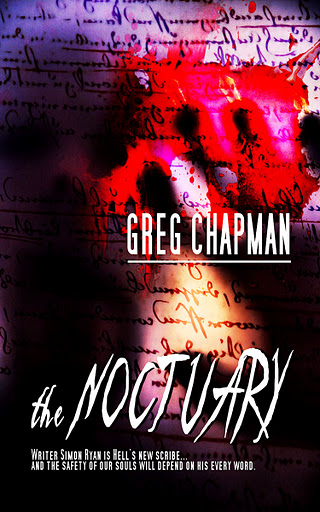
Although it’s been available to buy for almost a week, my new horror novella The Noctuary, has now been officially released by Damnation Books!

The e-book can be purchased direct from the publisher’s website HERE in various formats (the very first e-book sale is FREE and each thereafter goes up by 25 cents for 24 hours or until it reaches full price), while the paperback is on sale from Amazon or Barnes & Noble.

The Noctuary synopsis:

Simon Ryan is Hell’s new scribe…the safety of our souls will depend on his every word.

Struggling writer Simon Ryan’s life has gone to Hell.

Shadows are pouring into his reality and his words are not his own anymore. He has been chosen to become a scribe for some of the worst creatures of the Underworld–the ones whose sole purpose is to torment human souls–The Dark Muses.

As Simon writes he falls deeper into the abyss and before long he has no sense of what is real. With the help of another scribe, old and mutilated, Simon comes to discover that his writing can mould people and places–that he can write things out of existence.

To become a scribe he has to pass a test and the Muses offer him a chance to rewrite his horrible past. All Simon has to decide is how the story ends.

Peer reviews –

“Both elegant and visceral, violent and darkly witty, Greg Chapman’s THE NOCTUARY is an insightful look at the processes of creation and the birth of horror. His sinister muse, Meknok, is one of the most intriguing new horror characters since Clive Barker unleashed Pinhead, and indeed THE NOCTUARY is occasionally reminiscent of Barker’s grim beauty, while being very distinctly its own beast. THE NOCTUARY is rich, compelling, and unsettling, and Greg Chapman is obviously a writer in complete possession of his own sinister muse.”

Lisa Morton, four-time winner of the Bram Stoker Award and author of The Halloween Encyclopedia

“Greg Chapman’s THE NOCTUARY is straight from the depths of Hell. Here the past is a very difficult geography. Fresh and original it takes the reader on a frantic ride to regret; and may well provide the nightmares horror fiction often promises, but rarely delivers.”
Rocky Wood, Bram Stoker nominated author of Horrors! Great Stories of Fear and Their Creators and Stephen King: A Literary Companion

And here’s a NEW excerpt to entice you:

Schiller’s apartment, and more importantly his study, is an unruly mess. Books in ragged stacks cover the floor and more volumes fill every available shelf. As I stare at all of them, Schiller runs around wildly lighting candles, but their yellow glow barely penetrates the darkness.
“I bet you have a million questions,” Schiller suddenly asks as he uses the last matchstick to light another cigarette. He’d smoked two on the way to his apartment. “You’re wondering about the darkness, about Meknok—if he’s real. You’re wondering if it’s all in your head.”
I nod, but I have many more questions than just those. I ask Schiller how he knows so much about me.
“I had those same questions when Meknok came knocking on my door—really screws with your head,” he replies, tapping his left temple. I glance around at all the books again and this time I see the name of the author on all the spines—Henry Schiller.
There must be thousands of them, all bearing his name.
“Yep, they’re all mine. Every goddamned one of them.”
It’s impossible. Schiller would have to have started writing them before he was even a twinkle in his father’s eye for there to be so many. I randomly pick one off the shelf, a thick tome of about one thousand pages. The cover is made of red leather.
“Uncanny that you should pick that one,” Schiller says.
I read the title: Damn Nation.
“That book, as far as the critics are concerned, is my magnum opus. Took me ten years to write—‘an outpouring of protestation worthy of Saint Thomas Aquinas, or Dante’, the critics said. But it’s all shit really.”
“I know the book,” I tell Schiller, but I can’t tell him from where.
“Few people could. They weren’t published here. This is just my collection. Some of them made it out, but they’re very rare.”
I open the cover of Damn Nation, skip the title page and head straight for the first chapter:
The flames licked at Edgar Gale’s flesh, saturating the air with the sound of bubbling, bursting and spitting fat. The sickly-sweet smoke seeped into his nostrils, but he refused to succumb to the pull of suffocation; no, hell wouldn’t take him so easily.
Schiller is by my side, taking the book from my hands. He tosses it to the floor with the rest of them.
“As I said—it’s shit. Nowhere near as good as what you are apparently capable of.”
“You wrote those for Meknok?” I ask him.
He drags the tobacco smoke into his lungs and a vision of Schiller’s fictional ‘Edgar Gale’ breathing in his own burning flesh comes to mind.
“Yep, he loved that crap. He thought I had a lot of promise too, but over time he tired of me and started making my work harder to write.” Schiller held up his clawed appendage. “He said it would inspire me to further greatness, but it cost me an arm and…”
Schiller bends down and lifts his trousers to reveal a prosthetic right leg.

I’m horrified; if Meknok had tortured Schiller to get him to write thousands of books, what horrors does he have in store for me?

Keep an eye out on my Facebook-Author page for announcements about my Blog Tour for The Noctuary between December 5 and 16!

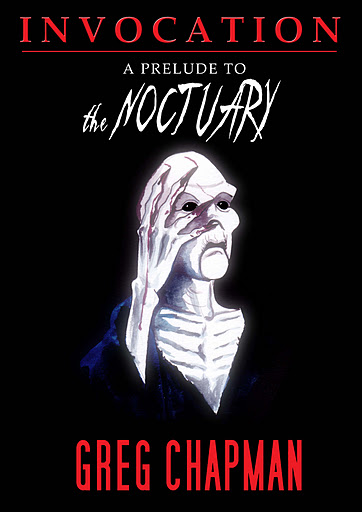
And don’t forget to download “Invocation” the FREE prelude to The Noctuary from Smashwords!

Author Interview: Benjamin Kane Ethridge

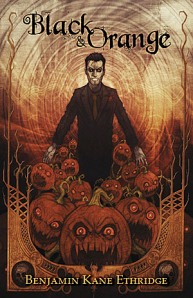
American author Benjamin Kane Ethridge has taken the horror world by storm with his first novel Black & Orange tieing the win for Superior Achievement in a First Novel at last year’s Bram Stoker Awards. Ben is holding an online tour for his novel in December and I recently interviewed him about the book and his passion for the horror genre:

Let’s start with the most important question first – what are you working on now? Any new books in the works?
Oh boy. I actually have a few books I’m priming in some form. There’s DUNGEON BRAIN, which is in submissions with a couple major publishers. There’s THE ENDING STREET, which is eagerly awaiting my editor’s pen. And then there’s the sequel to my first novel BLACK & ORANGE entitled NOMADS, which is getting a once over before I send it to my Alpha-Dog, Michael Louis Calvillo.
Why horror?
It’s so honest. What could be truer than our blood, our guts, our disgustingness from within our bodies and minds? Most other genres can only flirt with such topics that tap pure humanness. Horror reminds us of the worst possible outcomes for existence: we can live badly or die badly, and for some poor souls, both. That distinction is fascinating to me and it goes beyond entertainment’s normal effect. For instance, do you lose sleep over a nice romantic comedy or action picture? No, you consume the product, perhaps enjoy the experience, and leave it somewhere back in time. Horror you take forward. It goes with you a while. So there’s no debating the genre is some powerful, long-lasting stuff.
Your novel Black & Orange tied the win for Best First Novel at last year’s Bram Stoker Awards. Saying you must have been beside yourself would have to be an understatement? The achievement must have opened many doors for you?
Yes, without doubt. I think the striking difference would be I’ve been asked to contribute to certain publications, rather than going through the normal submission process. It’s wonderful to have my work really considered with eyes wide open, because, as we all know, it can be quite difficult to rise to the top of the slushies.
How did the concept for Black & Orange come about – and why a Halloween novel?
I wanted to approach Halloween from a Dark Fantasy angle, but I also wanted to write a book for adults to enjoy. The holiday has been harvested endlessly in name of Horror, and it can always provide that spookiness that’s near and dear to our hearts, but what of this other world, this spirit world, that opens up that night? Exploring that was my primary goal.
What does Halloween mean to you?
It’s evolved of course. First, it was about the spookiness that blew its cold breath down my neck. Second, trick or treating. Third, getting the perfect costume to wear to school. Fourth, tying one on at as many great parties as I could stagger into on a given October. And now… well, months after the holiday I have a little girl who can’t stop obsessing about pumpkins and scary witches, so my reason has reverted back to the spookiness, which is a nice place to return to.
Have you been published before and if so where?
Before my novel I had a string of short stories appear in various magazines, e-zines, and other publications of that sort. My latest was in an anthology called Ante Mortem. The story is called “From the Bowels.” And never fear, the story’s just as repugnant as the title would suggest. I was in a strange, Freudian mood when I wrote that one.
You’ve published collaborative works with Michael Louis Calvillo – how do you actually go about creating a work with another author when each author’s voice is so different?
Michael and I work extremely well together. Our goals with language and creativity meet at a golden center. It’s been a while since we’ve written anything jointly, but I surely miss it because doing so reminds me where my thoughts go when pushed in another direction. I lay down a rhythm and he plays a lead over it. Sometimes we harmonize, and sometimes we hit a dissonance, but it always turns out to be a fulfilling process in the end. Our urban fantasy ORDER OF DEATH was an amazing journey. We haven’t found a publisher for it yet, but in time we will, and I do hope we can return to that world soon.
What’s your day job? On your site it says you monitor California’s waterways? Have you ever considered using your job as a reference in your writing?
Definitely. The most horrific places I encounter in water compliance takes me to wastewater treatment plants and other sewer related monsters. There is plenty of fodder for the icky and terrifying in those locales!
Bad Moon Books is well regarded in the small horror press. How was it working with them? What is it about Bad Moon that makes them so good to work with?
Bad Moon wants everybody to be completely happy with the finished product. That’s something you don’t often get from some larger presses because they’re concerned with putting out the most saleable product at all costs to creativity and vision. The hard working staff at Bad Moon Books become your friends in an instant, which I value greatly above all else.
Do you have any advice for aspiring authors?
If you’re on the correct path, every marker on the writer’s journey is a place of varying discontent. An absolutely content writer is the truest fiction I can conceive of. Delusions work wonders for island-bound souls, so choose your mindset wisely, and do remember that being a tad miserable about your situation means the wheels are moving and you’re still looking in the rearview mirrors thinking “Where the hell am I? Where am I going next?” That’s the driver’s seat all writers should sit in.


To learn more about Ben’s writing visit his website : http://www.bkethridge.com/ or his blog http://benjikane.livejournal.com/


Invocation – A Prelude to The Noctuary

As part of my promotion of my new horror novella The Noctuary, I’ve released the short story “Invocation – A Prelude to The Noctuary” through Smashwords.

The short story introduces Meknok, the leader of the Dark Muses of Hell, the key antagonists in The Noctuary novella.

The short story is FREE for a limited time.

To download the story follow this LINK

For more information on The Noctuary you can visit the website or the publisher’s page at Damnation Books.

Author Interview: Rocky Wood (part 2)

In part 2 of my interview with Rocky, he talks about how he became involved with the Horror Writers Association, his struggle with Motor Neurone Disease and his forthcoming authorial works.

How did you get involved in the Horror Writers Association?
When I realized my foreseeable writing future was going to be tied to the horror genre I decided to join the premier writers’ association for that genre, which is of course the HWA. I was welcomed whole-heartedly and immediately.
Quite soon thereafter I got a Bram Stoker Award nomination for ‘Stephen King: Uncollected, Unpublished’ and so I decided to travel to Toronto and attend the Awards. Again, a whole-hearted welcome and I made friends that weekend who are still my good friends in the community today.
I am not one to join and watch other people do work. Over the years I have had leadership positions in political parties, environmental groups, sporting clubs, and organisations like the Australian American Association, mostly when I get involved its ‘boots and all’. So, when I decided to help HWA it was going to be all or nothing.
The first time I ran for Trustee I failed to get elected (yikes!) but I didn’t give up and was elected the following year. Two years later I was tapped for President, presumably on the basis of my efforts.
What many people don’t realize is that today’s HWA is delivered to our members by about 100 (yes, one hundred) volunteers, all working away quietly in the background. They range from the Board to the Web team, through the Juries and on to areas like the Membership Committee and the Bram Stoker Awards Committee.
I credit any success the HWA has had in recent years to its leaders (such as Deb LeBlanc, Vince Liaguno, Marge Simon and Lisa Morton) and to all these volunteers who believe in our mission enough to give up their spare time (and writing time at that!) to help strengthen the Association and deliver our daily needs. And that’s lots more in the planning tray by the way.
Horror has been a massive part of your life…does it still have the same meaning today? It’s changed so much with the evolution of the e-book. Where do you see its future?
That’s the $64,000 question, isn’t it?
Horror is the original genre, probably the original form of oral story-telling around the cave-people’s fire. It’s not going away, ever.
The e-book (and I believe that is only in its infancy) won’t change the basis of the genre – which is story. It just changes the delivery mode, making it even more accessible. It has its dangers – there’s some real crud being self-published, but that will self correct and there’s plenty of really good material coming to light in ebooks that wouldn’t have got published in print.
The ebook has so far to go – the inclusion of hyperlinks, research material, still graphics and live video, all of which will enhance the reader’s experience.
And I am one who believes the printed book will never leave us (maybe I’m an optimist) – even if it means people will use Print on Demand to buy a book they treasure and want to display in their home or office, after they read it electronically. All change brings both opportunity and challenge, and the same applies to the horror genre.
We must try to stay with the curve without over-reacting or missing our chances. We can experiment and fail, that’s okay. To me there are more than enough horror writers and small press publishers to try out all the new opportunities as they come along. Some will lead, some will follow, some will wither away. That’s life.
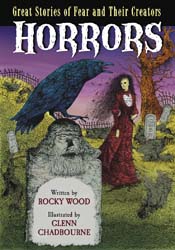
Last year Horrors: Great Tales of Fear and their Creators graphic novel was published by McFarland, with Glenn Chadbourne as artist. How did the idea come about – and why a graphic novel?
The publisher approached me to write a ‘graphic novel’. Apart from one short story I had never published any fiction, and I had barely attempted to write any. And I told them so, but they were very insistent and asked me to pitch any idea.
This one came out of nowhere – the idea that the great horror tale may not be as unplanned as we might think. I delighted in being able to go back to Mary Shelley’s, Poe’s and Stoker’s original material (among other authors) and present them again, much as they were written (our ‘memory’ of ‘Frankenstein’ or ‘Dracula’ is infected by the various pop culture adaptations) and to weave in the true lives of their creators. Most of these people lived lives full of tragedy (as did most people all around the world before say the end of the Second World War). To bring that to the reader’s attention and weave it into a storyline was a lot of fun.
I knew Glenn Chadbourne through the King community (he has illustrated King on a number of occasions, most spectacularly with Cemetery Dance’s, ‘The Secretary of Dreams’ series). Strangely, Glenn and I were born on the same day in the same year, he in Maine and I in New Zealand. And I was lucky enough to visit him in Maine, stay with him, and enjoy a wonderful lobster dinner while we were working on the book. He is possibly the most brilliant horror illustrator working today and it was a great honor to have him illustrate my prose. And he’s just a wonderful man to boot!
Do you have “another” favourite author?
Tricky question that. I read widely in areas outside horror – particularly biography and history. I have a few historians I read every time their work is published (eg, Martin Gilbert) and I still love to read my old fiction favorites like John Irving (who gets better by the book). I particularly enjoy Simon Winchester’s books, which are a mix of geography, geology and history and full of obscure and interesting facts.
Late last year you were diagnosed with Motor Neurone Disease, which degrades the muscles and is invariably fatal, yet amazingly it hasn’t affected your passion as an author and HWA ambassador. How do you manage it?
Yes, I was. When you are told you have a fatal illness and there is no hope of recovery or survival you face that moment of truth. You can curl up in a ball, you can limit your horizons to your family and friends (a very valid choice), or you can continue living life just as before. That last was my choice.
I have always lived life ‘big’. I’ve had a great life – lots of travel all over the world, great friends and wonderful family, and many ‘communities’ in which I have participated (politics, sport and horror among them).
 I had been fortunate enough to see my favorite sporting teams play in great stadiums – the New Zealand All Blacks at home or at Cardiff, Manchester United at Old Trafford, the Boston Red Sox at Fenway. I’d made friends at conventions all over the world – including in the old Yugoslavia. I’d traipsed archaeological sites in the jungles of Mexico with my friend, Erich von Daniken (author of ‘Chariots of the Gods?’). I’d met political, sporting and artistic leaders and worked for the causes I believed in, such as the Australian-American alliance.
And now I was being told that within 2-5 years I would be dead, and that my body would slowly give out in a manner that meant I would lose my ability to speak, walk, type and finally move at all. So I made that choice I mentioned and I also chose not to be defined by the disease. I would define IT – for me at least.
In the time I had left I would continue as much as my normal life as I could and I would actually fit in many of the remaining things some people would call a bucket list (I hate the term).  So I travelled to Egypt and Lahaina (Hawaii), I worked on a couple of books, I tried to spend even more time with family and friends, I went to see Manchester United play in a European final at Wembley, visited Auschwitz and the D-Day/Normandy battlefields, and saw my beloved All Blacks once again crown champions of the World (and in our homeland at that) and so on.
And I am throwing my last best efforts into helping the HWA be a better and more sustainable organisation for my Presidency. I had been elected only months before I was diagnosed and took up the role only eleven days after I received the news. Hopefully, by the time I stand down, we will have grown our membership even more (we are already up from 400 odd to over 650 in a year); we will have bedded down the Jury process for the Bram Stoker Awards; we will have set manuals and processes in place for our major operating areas like the Web Team, the Stokers and the Board; we will have relaunched our Chapters; we will have a whole new website; and we will have delivered on a number of events like the Bram Stoker Awards Weekend last June on Long Island that received high praise from the horror community. We will have an HWA that continues to be grow and be successful long after I am gone.
As to writing, I had a couple more books in me that just had to be delivered. You know how it is – you don’t really have a choice! To answer your question, I guess I have always lived life with passion and I don’t intend that to change just because my body is failing me.
You’ve had a few of your works on King republished as e-books…any new books – King or otherwise – on the horizon?
There’ll be at least two more books from me – another King thing I’m not ready to announce quite yet; and of course I’ve been writing a new graphic novel – ‘Witches!’  
This is a history of the witch persecution craze that infested the ‘Western world’ from about the 13th century into the 17th, before Reason prevailed.
It doesn’t seem to get much discussion in the popular literature world and we thought it was worth going back and trying to explain what happened and why.
‘We’ of course is myself and Lisa Morton (the Bram Stoker Award winning author), who just happens to be Vice President at the Horror Writers Association and nd it’s illustrated by a particularly talented Australian from Rockhampton, by the name of Greg Chapman. Perhaps you know of him?
I am immensely proud of what the three of us have delivered (yes, it’s all but finished) and look forward to seeing the printed work when McFarland publish it early next year.


Read part 1 of this interview HERE

DARKSCRYBE.COM

Stay informed with curated content and the latest headlines, all delivered straight to your inbox. Subscribe now to stay ahead and never miss a beat!

Skip to content ↓