Horror on the radio

I was very fortunate last week to be interviewed by ABC Local Radio for it’s “Getting to Know You” segment and talk about all things horror.

download

Twenty minutes talking to Mornings host Kim Kleidon about how I got into writing and horror fiction specifically was a whole lot of fun because any opportunity to discuss horror fiction is one not to be passed up.

In the interview you’ll hear about my inspirations, my thoughts about Halloween, my favourite authors and the Australian Horror Writers Association and the US Horror Writers Association.

You might also hear about my upcoming novella The Eschatologist and the novel I’m currently working on. I hope you give it a listen.

Thanks to Kim Kleidon and Megan Hendry at the ABC for the opportunity.

Click on the PLAY button below!

The Horror of Grief

Looking back on my work over the years, I’ve discovered there’s a recurring theme in all of my novellas – a child going through grief.

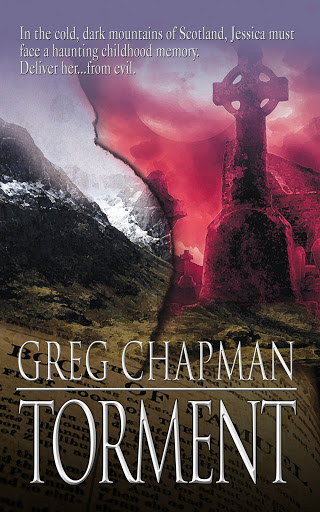
Torment features a girl whose mother died during an exorcism.

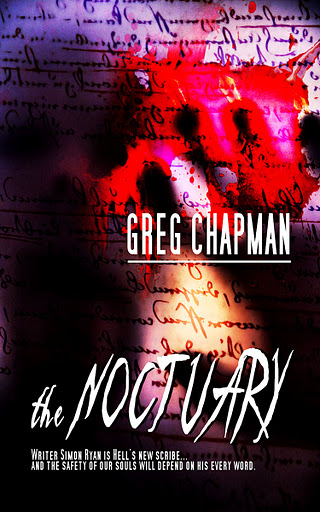
The Noctuary is about a man who is given the chance to go back and change a horrible moment in his childhood.

Vaudeville deals with a boy coming to terms with his father’s passing and finally…

The Last Night of October is about two children whose lives are changed forever on Halloween.

Can you judge a book by its cover?...

I know this is my sub-conscious at work here because grief and close personal loss defined my early teenage years.

"The Noctuary" cover revealed!

When I was about 15 my best friend died suddenly at school. He’d had a history of heart problems and one day while playing sport his heart stopped and he never regained consciousness. When it happened I wasn’t at school because I had to go home and collect a piece of homework I’d left behind. When I got back to school I was told what happened. I was devastated and even more so when I went up to hospital to say my goodbyes. This moment, naturally stuck with me. I’d lost relatives; grandparents, uncles and aunts when I was younger, but then I never really understood the finality of death.


These feelings were reinforced when I lost my mother to breast cancer five years ago, when Rocky Wood passed away in December last year and a few months ago when my mother-in-law died.

vaudeville-and-other-nightmares

Grief is a powerful force and I conjure the feelings I experienced all those years ago in my writing. Perhaps my writing is my mind trying to come to terms with the loss of all the loved ones I’ve lost over the years.

The Last Night Of October

Horror, to me, is more about the human condition than monsters under the bed or gore for gore’s sake. Horror is when someone is taken from life before their time and I think all of us can relate to that in some way or another.


News: Voodoo Press to publish my novella “The Eschatologist” in 2015!

I’m very excited to reveal that this week I signed a contract with Voodoo Press to publish my post-apocalyptic novella, The Eschatologist.

Voodoo Press, which is based in Malta, recently began publishing English language titles and I’m proud to have been added to their line up of releases for 2015.


vp_logo1x13

The Eschatologist is a survival horror tale centred on David Brewer, who is trying to keep his family alive in a world torn asunder by a Biblical apocalypse. Yet there is salvation, in the guise of a stranger who offers survivors sanctuary. All they have to do is declare their faith in God’s final – and bloody – plan.

In addition I’ll be providing some internal illustrations for the novella.

I’ve been wanting to release a post-apocalyptic tale for some time and I’m very eager to start working with Voodoo Press.

Stay tuned for more details on the release of The Eschatologist in the near future.

Bullets and Ballerinas

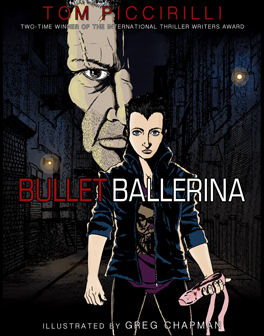
The one-shot crime noir comic, Bullet Ballerina I illustrated for award-winning author Tom Piccirilli is now available for pre-order from SST Publications.

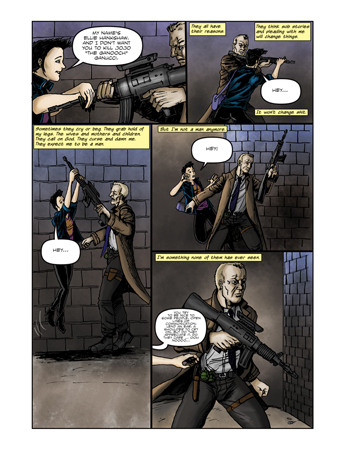
This was a whole lot of fun putting this together. Tom’s script was smart and sharp and full of wit and emotion. It was a real privilege to be able to bring his characters to life on the page. I received a proof copy last week and it looks amazing.

Below is the cover and two pages from the book.

bbcover
bb_p1

bb_p2

SST will release the book in hardcover, paperback and digital formats on June 1, but you can pre-order a copy now via this link:

https://www.sstpublications.co.uk/Bullet-Ballerina.php

A signature version with mine and Tom’s signatures will also be available.

You can learn more about Tom’s writing via his website – http://thecoldspot.blogspot.com.au/

Passion and Pain

A lot of authors I know don’t write full time.

I’m one of those authors.

The simple fact is that it doesn’t generate enough income to chuck the day job away.

But it will never stop me from doing what I love to do.

I’ve recently been profiled on David McDonald’s blogsite as part of his “Paying for Our Passion” series, where authors from a wide range of genres and places talk about what they sacrifice to create.

You can read my piece here –

Paying for Our Passion – Greg Chapman

On the other side of the coin, there’s another series of guest posts on authors’ fetishes, or secret inspirations, over at Lee Battersby’s blog.

In my guest post I reveal that I actually have a very messy dungeon in my house.

http://battersblog.blogspot.com.au/2015/04/fetish-friday-greg-chapman.html

Thanks heaps to David and Lee for giving me the opportunity to hijack their websites. 😛

Dark Offerings

I’ve been writing quite a few short stories of late and I thought, given it’s been a while between posts, that I’d share a few lines from them….

writing

He realised he was telling himself the same thing he told his patients. Grief was no more than an addiction you had to let go of.

His crying woke me up in the middle of the night. I went to wake Mummy to try and tell her, but she was too asleep. The man was standing in the backyard, crying and singing, but his singing sounded a lot like moaning. I heard the word Allah again and wondered if he wanted his God.

Melissa saw Josie Miller’s smiling face inside her head. She seemed so nice, so happy; until she came to this place. Now Melissa would join her in madness.

The cries were a symphony to Doctor Edgar Harding, a howling song that struck the soul with the certainty of a tuning fork.

The witches visited her more frequently, sometimes three times a night. The women were little more than shadows, their gowns loose shrouds barely keeping their dark souls together. 

Share some lines from your work (or works) in progress in the comments. 🙂

Scream Queens: A Women in Horror Month interview (Part 2)

In part two of my Women In Horror Interviews, I speak with Australian authors/editors Kaaron Warren and Amanda J Spedding. You can read Part 1 HERE.

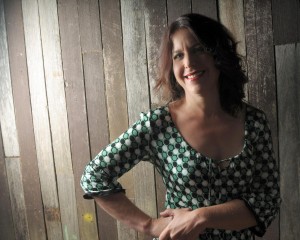
Kaaron-Warren-italian-©Emma-Dillon2-300x240Bram Stoker Award Nominee and Shirley Jackson Award winner Kaaron Warren has lived in Melbourne, Sydney, Canberra and Fiji. She’s sold almost 200 short stories, three novels (the multi-award-winning Slights, Walking the Tree and Mistification) and four short story collections including the multi-award-winning Through Splintered Walls. Her latest short story collection is The Gate Theory. Kaaron is a Current Fellow at The Museum of Australian Democracy at Old Parliament House, where she is researching Robert Menzies, Sir William Ashton, and the Granny Killer, John Wayne Glover. The resulting crime novel should see print in 2016. You can find her at http://kaaronwarren.wordpress.com/ and she Tweets @KaaronWarren

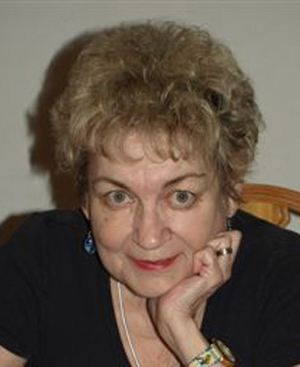
AJ SpeddingAmanda J Spedding is an award-winning author whose stories have been published in local and international markets earning honourable mentions and recommended reads. She won the 2011 Australian Shadows Award (short fiction) for her steampunk-horror ‘Shovel-Man Joe’. She is the owner and operator of Phoenix Editing and Proofreading, and between work is currently working on her first novel and awaiting the mid-year launch of her horror comic, ‘The Road’. Amanda lives in Sydney with her sarcastically-gifted husband and two very cool kids.

What first attracted you to the horror genre? Why do you write and read horror?

KW: Secrets and truths. I don’t like a happy ending in stories because happy endings are predictable and I want to be surprised. I write it sometimes because it’s my way of dealing with a world I have no control over. I read it because there are no holds barred and that’s the same with writing it. There are no barriers to the story; no niceties.

AJS: Who doesn’t love a good scare? Really, who doesn’t? Well, my father for one, but my love of horror rests squarely on his shoulders (although he refuses to accept responsibility!). I remember when he read Poe’s The Raven to me when I was about five; I was enamoured with the cadence and the bleak imagery. I’ve sought out the darker side of storytelling since.

There’s a beauty in horror I just love. The beauty in the struggle for survival, in the decisions (good or bad) a character makes, in how they deal when all appears lost. It’s that sliver of hope in a hopeless situation that draws me to the genre.

It’s what I try to bring to my own writing; to create a reality within unreality that would have a reader wonder what they’d do in the same situation. The more awful the situation the better. That’s when I get to showcase the mettle of a character; when they’re stripped back to their true selves, their primal selves. There’s an honesty to horror not a lot of other genres get to show. It’s a great place to play!

How do you feel about Women in Horror month? It’s most certainly warranted, but recently Acting HWA president Lisa Morton said she wished it was a “Celebrate-Horror-Writers-Regardless-of-Gender-Month”. What are your thoughts?

KW: I agree to a certain extent. However, many names mentioned during the month may not receive the spotlight otherwise. I don’t really like categories of anything because they can mean people focus on that one element and perhaps judge a writer for it. However, they can be useful for highlighting names. More categories, I say!

AJS: I have mixed feelings about WiHM. To my knowledge I’ve not been subject to gender prejudice within the industry, but I’d be a fool to think it doesn’t occur. Unfortunately, there is a resistance to women horror writers, and February seems to unleash the worst of those offenders. I’ve seen some truly dreadful blog posts about a woman’s “ability” to write in the genre let alone be good at it; that WiHM is a personal affront to male horror writers and the male population as a whole. Last year was a particularly godawful time for these types of posts, which, ironically, only furthers the need for WiHM.

Horror is often seen as the ‘man cave’ of speculative fiction. One of the great things about WiHM is that it showcases female horror writers and perhaps results in someone who’d not normally read a horror story written by woman to give it a try. Would I like February to be ‘Celebrate Horror Writers Regardless of Genre Month’? Wouldn’t it be nice if all writers, regardless of gender, were judged solely on their work all the time. Sadly, that’s not the reality. My wish would be for female horror writers to be held in equal standing with our male counterparts.

What are your perceptions of the number of female horror authors out there right now? What should the wider community be doing to encourage them?

KW: I’m one of the judges for the Shirley Jackson Awards this year and it’s very clear: there are many, many talented female horror writers today. We can encourage all authors by reading widely and with an open mind. Articles like this excellent one from Marty Young http://martyyoung.com/the-wonderfully-horrific-world-of-female-horror-writers/ are great because they can expose us to writers we may not have read, and tell us more about our favourite authors.

AJS: I think there are a lot more female horror writers out there than most realise. What makes it difficult to judge is the amount of sub-genres and classifications being thrown around. When you add in the fact that some female horror writers use pseudonyms, the waters get muddier still. From what I’m seeing on social media, though, I do believe the number is growing, and that makes me a happy horror writer.

How to encourage a female horror writer? Buy their work. Review. If you’re a fan, tell the author then spread the word. The same applies to any author regardless of gender and regardless of genre. If you love an author’s work, let them know; review; spread the word. And if you’re someone who hasn’t read a horror story written by a female author, why not source one. That’s great encouragement and support right there.

There are many women writing paranormal romance. Do you think that has had a positive or negative influence on women authors in the horror genre?

KW: This is not my genre, either writing or reading, but I know many women writing in the genre love horror as well as romance and I think they give both the respect they deserve. Paranormal romance is very separate from what is traditionally horror, so I don’t think one affects the other.

AJS: Ooh, tough question. I can’t speak on behalf of other female horror writers. Personally, paranormal romance isn’t for me. If you’re looking at the general reading community, I don’t think most understand the difference between PR and horror – it’s all lumped in together. When I say I write horror, the response I normally receive is: “Like Twilight?” It’s that misconception I believe is based solely on gender; it’s not an option I believe would be offered if I were male.

More often than not I have to explain the difference between paranormal romance and horror, and that my writing drags itself from the bloody abyss where monsters are born, not the sparkly, sepia tones I’ve often found in PR. It can be tiresome having to explain the why behind my choice of genre, and it’s irritating to have to explain it all, especially when paranormal romance is often suggested (unasked) as an alternative.

I have found that paranormal romance does open some to reading horror, and that can only ever be a positive. Those who read paranormal romance may pick up a tome that treads more on the side of horror than what they’re used to. Call it a stepping stone, if you like, to the horror genre.

Which women in horror inspire you and who should we be reading?

KW: Here are just a few of many: Lisa Tuttle, Gemma Files, Caitlin R. Kiernan, Elizabeth Hand, Margo Lanagan, Kirstyn McDermott, Deborah Biancotti, Lisa Morton, Livia Llewellyn, Lucy Sussex, S.P. Miskowski, Alison Littlewood and Thana Niveau.

AJS: Kaaron Warren – without a doubt in my mind one of the most nightmare-inducing horror writers about! If you haven’t read her work, you’re doing yourself a disservice. Stop reading this and go get a copy of her work… do it now!

Caitin R Kiernan is another writer who isn’t scared to take a reader to some very dark places; she’s won a stack of awards for her writing. Let her be your tour-guide to her worlds, you won’t be disappointed.

Shirley Jackson. I mean Shirley Jackson. If you’re new to horror, then this is the place to start. If you haven’t read any of her work then get thee to a bookstore! We’ll talk again when you stutter your way through your fawning over the brilliance of the lady’s writing.

And finally, tell us about what you’re currently working on.

KW: Lots on! I’m finalising a new story for the print edition of my short story collection, The Gate Theory. I’m researching a crime novel as part of my Fellowship with the Museum of Australian Democracy at Old Parliament House. I’m hoping to sell my two completed  novels. I’m working on my story for the Review of Australian Fiction, an issue in which I’m paired with Michelle Goldsmith. And more….

AJS: By midnight Friday the 13th, I’ll have finished the first draft of my novel ‘The Lightning Tree’ (working title). It’s an apocalyptic tale set initially in a fantastical world before moving … well, before moving on elsewhere (no spoilers!) It’s a story of gods and monsters, survival and its cost. It’s driven from my short story ‘The Whims of my Enemy’, which I’ve always wanted to explore in greater detail. I get to create a world, culture, mythology then systematically destroy it. How can you not love writing horror?

Thank you Kaaron and Amanda! Well, I hope you all found this discussion interesting and will support women in the horror genre!

For more on Amanda’s writing, visit her blog, “Author, editor, caffeine-addict, wannabe ninja” – http://amandajspedding.com/ . You can also read one of her short stories for free at Cohesion Press.

Scream Queens: A Women in Horror Month interview (Part 1)

February is Women in Horror Month and while you may ask, why does there have be a gender division in the horror genre, or any genre for that matter, it’s important that all writers get the recognition they deserve. So I decided to give some of today’s leading women in horror the chance to share their thoughts on Women in Horror Month with a special interview.

In part one, you’ll hear from Marge Simon and Stephanie M. Wytovich, two very talented authors/poets from the United States.

OLYMPUS DIGITAL CAMERAMarge Simon’s works appear in publications such as Strange Horizons, DailySF Magazine, Pedestal, Dreams & Nightmares. She edits a column for the HWA Newsletter, “Blood & Spades: Poets of the Dark Side,” and serves as Chair of the Board of Trustees. She won the Strange Horizons Readers Choice Award, 2010, and the SFPA’s Dwarf Stars Award, 2012. In addition to her poetry, she has published two prose collections. She has won three Bram Stoker Awards ® for Superior Work in Poetry. Her poems appear in Qualia Nous (Written Backwards), The Dark Phantastique (Jasunni Productions) and more poems will appear in a HWA/ Simon & Schuster Y/A collection, It’s Scary Out There, 2015. http://www.margesimon.com
10991370_10153614553749616_895528590243043201_nStephanie M. Wytovich is the Poetry Editor for Raw Dog Screaming Press, a book reviewer for Nameless Magazine, and a well-known coffee addict. She is a member of the Science Fiction Poetry Association, an active member of the Horror Writers Association, and a graduate of Seton Hill University’s MFA program for Writing Popular Fiction. Her poetry collections, HYSTERIA and Mourning Jewelry can be found at www.rawdogscreaming.com, and her debut novel, The Eighth, will be out in early 2015 from Dark Regions Press. Follow Wytovich atstephaniewytovich.blogspot.com and on twitter @JustAfterSunset.

What first attracted you to the horror genre? Why do you write and read horror?

MS: I’d rather say I’m attracted to books with dark elements –unique to the writing style. I began with dark fantasy as a child, then found science fiction and finally literary horror (not counting the horror comics I drew in my early teens!) What attracts a moth to a flame or a bee to the honey?

SW:  Horror has always been my genre of choice, even when I was little. The idea of monsters and fantastical beings was never something that scared me. In fact, I was intrigued—fascinated even—by the idea of the unknown, the unexplored. Horror pushed me to ask questions and then encouraged me to try and find the answers. And that’s why I love the genre!  It makes me question everything: my faith, my morals, my reality. It forces me to look deep within myself at my most animalistic and primal needs, and then it asks me, is this real? Is this happening? Can you do this in order to survive?

And that’s what life is. It’s a game of survival. I wanted to read books that challenged me emotionally in the sense that I got to know to myself and my instincts better, and I wanted to write books and write poetry that tested what people thought about themselves, and then made them face their most private, personal shames and desires.

Humanity is the world’s scariest monster.

Horror lets me tame it.

And sometimes, it lets me set it free.

How do you feel about Women in Horror month? It’s most certainly warranted, but recently Acting HWA president Lisa Morton said she wished it was a “Celebrate-Horror-Writers-Regardless-of-Gender-Month”. What are your thoughts?

MS: I fully concur with Lisa on this! Who cares what sex you are, to celebrate Horror Writers! Who cares what sex the writers of horror are? We don’t.

SW: I can understand the concept of removing Women in Horror Month, because then it takes away the label of female horror writer and simply just leaves horror writer which is the absolute of the matter. However, the hard truth is that most male readers still only read male authors, and when it comes to the big names in the genre, it’s still predominately male. Most people don’t even know Shirley Jackson or Mary Shelly. Hell, I didn’t know them before I started studying the business, and even then, any How-to book I read was mostly edited by a man, and composed of almost male authors. Same with anthologies. Growing up, I knew Stephen King and Dean Koontz, and a couple others, but the idea of a female horror writer was lost of me. In fact, to me, it seemed like the closet any woman did to horror was paranormal romance.

Now yes, I was young and stupid, but I’ve always considered myself a voracious reader, so what does that say about the stereotypes and influences that are being pushed on readers when it comes to the genre? There’s the absence of femininity. The role of victim. The notion that women only write love stories about vampires and shape-shifters, or that we get kidnapped and need a man to rescue us. Until these obvious trope-clichés go away, I think there needs be awareness dedicated to gender equality in the genre, and I think Women in Horror Month is a great step in the right direction for that. Yes, we do need to show that there are strong female characters, but even more so, we need to promote that there are strong female writers creating them and working to keep them alive in the genre that we all share and love.

What are your perceptions of the number of female horror authors out there right now? What should the wider community be doing to encourage them?

MS: As I don’t write horror novels, or novellas, I asked a friend of mine who does. Here’s what she says, and I’ve heard her say it before over the past few years, so I tend to agree:

“I believe that there are many talented and prolific female writers in the industry today, but they are overlooked and often dismissed. There is bias among some publishers (not all) regarding women. Some are willing to work with male writers, asking for rewrites and edits, if they feel that a manuscript has potential, while a comparable manuscript submitted by a woman is flat out rejected.

Many readers in our genre are male and they also dismiss female writers. That’s a huge problem when the time comes for reader’s choice awards, and best selling lists, in some circles. All readers should be encouraged to read work by both men and women.

I believe that part of the community, some publishers and some readers are harder on women regarding reviews, sales and publishing.

The wider community should reach out, make themselves aware of women who have quietly contributed fiction, poetry and art over the years. Many of them are introverts who forsake message boards and social media in favor of honing their craft. Others should look beyond appearances and loud voices and learn that their are many unique and brilliant voices that have been dismissed for many years, by both the community and the publishing world.”

SW:  There’s more and more women being celebrated and recognized for writing horror and that makes me happy because it’s putting us on the same playing field as men. I don’t think there necessarily needs to be encouragement, but rather support, but not as a female writer. Just as a writer.

At the end of the day, we’re all doing the same job: creating stories. If you like them, tell someone about it. Write a review. Share the book. Celebrate the author that built a world and shared it with you.

There are many women writing paranormal romance. Do you think that has had a positive or negative influence on women authors in the horror genre?

MS: I don’t read paranormal romance, but I have heard that it’s popular and pretty much dominated by women. That matters nothing to me, because I write speculative dark fiction, for the most part, and I see no bias going on in that area.

SW: Oy. Speaking from personal experience, I think this has had a negative influence on women in the horror genre. I know that when I tell people that I write horror, they immediately go, ‘oh, what, so like Twilight?” And there’s nothing wrong with writing paranormal romance—in fact, one day, I’d very much like to write one, but it’s the stigma that’s attached to female writers that we can only write love stories that bothers me.

Having said that, I think that love is one of the most horrific topics to write about as a horror writer, so in some ways, maybe it’s not the concept of love that’s the problem, but rather the implication that women can’t write violent, dark prose that’s more the issue at hand. To me, it seems like women get pigeonholed into extremes: we’re either not strong enough, and are therefore labeled as damsels in distress, or we’re too strong that we’re labeled as butch or masculine. That needs to stop.

Which women in horror inspire you and who should we be reading?

MS: Elizabeth Massie’s stories generate the most amazing inspirations for my work. But there are many others, old and new – Ruth Rendell, Daphne DuMaurier, Joyce Carol Oates and Kathy Ptacek to name a few.

SW: I love anything by Mercedes Murdock Yardley, Helen Marshall, Melanie Tem, and Damien Angelia Walters. I’m also a huge fan of poetry by Linda Addison, Marge Simon, Rain Graves, and Donna Lynch. These ladies both inspire me and motivate me, and I can’t recommend their work enough.

And finally, tell us about what you’re currently working on.

MS: I’m finishing up another poetry collection tbp by Eldritch Press this year, Naughty Ladies, illustrated by Sandy DeLuca. She and I are also collaborating on yet another collection, which will include some of my flash fiction, Dark Dolls.

SW: I’m currently working on a poetry collection titled, Brothel. It’s a collection of 100+ poems that explore the day-to-day life of women working in a whorehouse. I’ve wanted to tackle a dark, erotic topic for quite some time, and the more I read about brothels and how they operated and worked as a business, the more I thought that this would be the perfect opportunity to comment on sexuality, feminism, and the truths and mysteries that surround the working girl. Each poem is told from the perspective of a different girl in the house as she reminisces and talks about past and present clients while discussing the good and bad about the job. It’s dark, it’s sexy, and I’ll be honest with you, not all the clients make it out alive.

Read more of Stephanie’s thoughts on Women in Horror Month over at her blog – http://stephaniewytovich.blogspot.com.au/2015/02/this-is-not-female-horror-writer.html

Thank you Marge and Stephanie. Extremely insightful. Stay tuned for part two, with Australian authors/editors Kaaron Warren and Amanda J. Spedding, later in the week.

In the meantime, read this very insightful post by fellow author Marty Young over at his blog.

I’d also like to acknowledge the recent passing of author Melanie Tem, an incredible loss in the horror community. Many condolences to her husband Steve Rasnic Tem and their family.

That Hoodoo, Voodoo That You Do anthology released

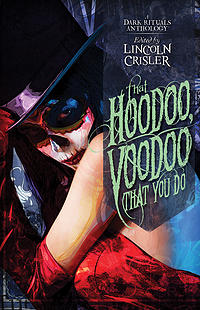
The Angelic Knight Press/Ragnarok Publications anthology, That Hoodoo, Voodoo That You Do, has been released today and includes my tale, “Wounds”.

The anthology was edited by Lincoln Crisler and contains 22 stories all exploring the theme of dark rituals. The splendid cover art illustrates it perfectly, don’t you think?

voodoo

My story centres on a former FBI agent who is brought back in to help solve a series of murders committed by a killer who is already dead. The wounds in the victims bodies provide the answers. Here’s an excerpt from the story:

Robert entered an empty interview room and sat down with the case file.

Dante was at the gates and it was time to open them. Robert peeled back the cover and skipped the introductory report. He already knew there were two victims; what he had to read now was the finer details: the post-mortem report, the list of suspects, and of course, the crime scene photos. As he turned the pages, he turned the pages of his memory; sheaves of pain rolled over and crashed down like waves. He squeezed his eyes shut, eager not to let the past slice into his head. But this is the price Dante had to pay every time he abandoned all hope.

The killer had abducted his victims, stripped them naked and opened their torsos with a broad, arched blade. The wounds were scattered evenly over the torso, arms and legs in sets of seven. In Numerology, 7 is the thinker, the seeker of truth. Seven times seven, times seven. It was clear this killer was seeking some hidden truth, just like Sickle. And just like Sickle, this killer had disposed of his victims by displaying them inside abandoned buildings throughout the city.

A twinge of pain flowed down his right side. He pressed his hand to his abdomen, desperate to stifle it, but the pain was back now, as fresh as it ever was. If someone was copycatting the Sickle Killer then there would be five more victims. The magical number seven. A ritual of madness.

There was a knock at the door, wrenching Robert away from the pages of the case file. He turned and found Van Nouten looking at him with a pitying stare.

“The troops are ready for you, Bob.”

If you liked that you can pick up a copy of the digital version of the anthology via this LINK. The paperback version is expected to be released soon.

DARKSCRYBE.COM

Stay informed with curated content and the latest headlines, all delivered straight to your inbox. Subscribe now to stay ahead and never miss a beat!

Skip to content ↓